

New Zealanders continue gathering to oppose a political threat to the Treaty of Waitangi, which protects Mori rights, writesCherie Moselen.
NEW ZEALANDERSare protestinga political bid to dismantlethe 125-year-old Treaty thatsafeguards Indigenous rights.
ThePrinciples of the Treaty of Waitangi Billsparked protests recently thatsaw more than 40,000 peopletake to the streets incoordinatedmarches,calling for the New Zealand Government to"Kill the Bill".
The controversial Bill wasintroduced to ParliamentinNovemberlast yearbyDavid Seymour's right-wing minority political party and member oftheLuxon Coalition Government,ACTNew Zealand(A.C.T.).
A.C.T.wantsto"reinterpret" the Treaty's principles in law.Were it to pass, the Billwouldtrample ontherights of Mori, whoconstitutearound 20 per cent of New Zealand'spopulation of 5.3 million.
As reported byAl Jazeera, aveteran Mori issues journalist referred to the Bill asan attempt to redefine decades of exhaustive research and negotiated understandings of what constitute principles of the treaty.
On 6 February, when crowdsgathered in Waitangi at the spiritual home ofTe Tiriti o Waitangi(The Treaty of Waitangi) to participate in New Zealand'snational daycelebration, many voiced their outrage at A.C.T.'s attempt to spike thecountry's founding agreement.
Devilin the double-bill detail: Attacks on TreatyFollowing Australia's rejection of the Indigenous Voice to Parliament, New Zealanders are currently battling threats to the Treaty of Waitangi that exists to protect Mori interests.
Treated with contempt
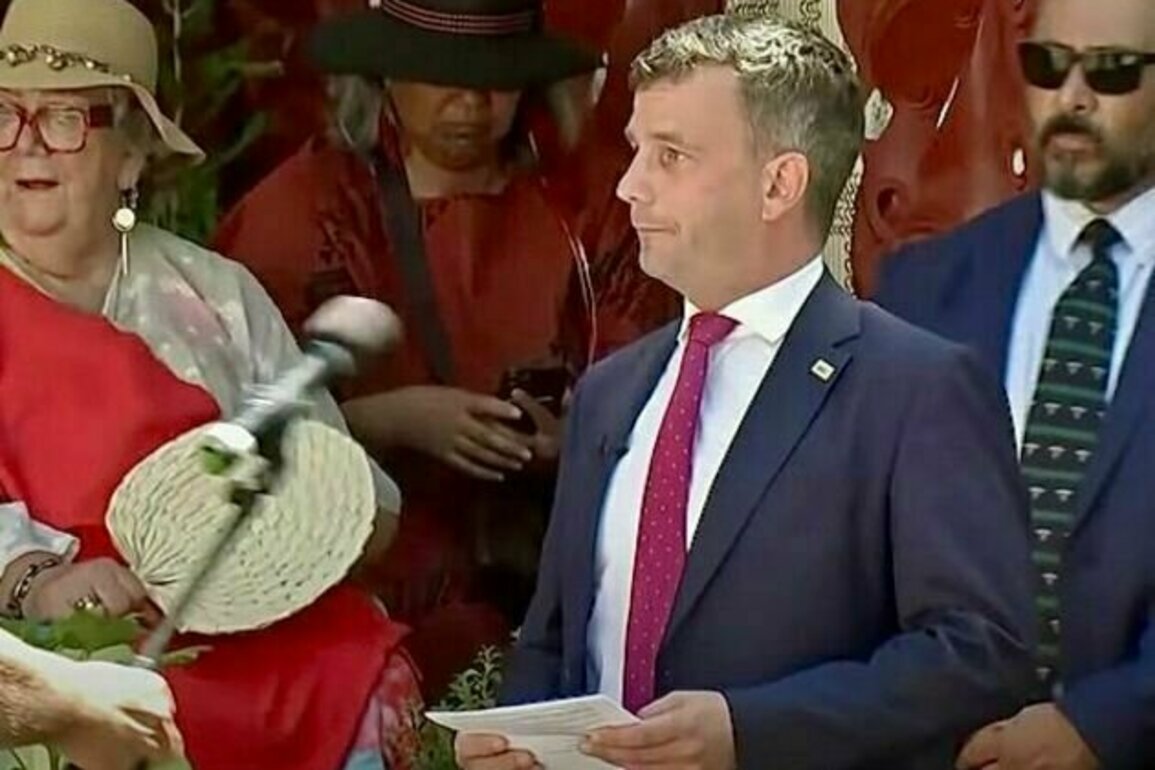
Seymour, who hasMoriroots, wasformally askedby hishap (tribe) not to speak at Waitangithis year due to thedivisive Bill.Despite thisrequest, he chose the occasion to platform A.C.T.'s proposed Treaty changes andclaimedtheywouldbenefit all New Zealanders, includingMori.
Members of the welcoming partyturned their backson him a responseundoubtedly linked toA.C.T.'sprioritisingof private property rights over social and environmental concerns and the Treaty thatdemands accountability to keepa balance.
The Treaty of Waitangi is championedspecificallyby New ZealandsHuman Rights Commission,because:
IAcontactedDavid Seymour to askwhy, since it has been commended by the NZ Human Rights Commission, the Treatyneeded revising at all,but had not received a response by thetime this story was published.
Prime MinisterChristopher Luxonwas notablyabsentat Waitangi on 6 February,accused by someMori leaders andpolitical opponents of"hiding".
AboutLuxon's absence,tribal council chair ofNgi Tahu,Justin Tipa, said:
Muzzling Mori voice
Seymours attempt to dismantle the Treatycomes hard on the Coalition's urging an end tote reo(Mori language) being used in government departments.
About suchdiscrimination, former Labour Prime MinisterChris Hipkinssaid:
A.C.T.'sdesire to ringfence Mori influence in the co-governance of New Zealandis viewed by many as asmearon the countrys largely progressive bi-cultural relationship, which has often been compared as favourable to that of Australia, for example.
Unlike in Australia, where the British Crown never acknowledged Indigenous Australians as sovereign or having land rights, NZ'sTreaty helpsprotectits Indigenous culture because public servants must'...develop policy which genuinely reflects Mori values, interests and needs'.
Four dedicated Mori seats were mandated in 1867to establish political agency for New Zealands First Nation's people, highlightinga key social differencebetween Australia and New Zealand.
Australia'srecent attempt througha referendum to enshrine aFirst NationsVoice to Parliamentalthough,it didn't carrylegislative powerfailed.
NZ race relations provide clearer picture for Australia's Voice denialThe inflaming of race relations in New Zealand provides a basis for repudiating the No case made against The Voice.
New Zealanders speak out
Feedback on the Principles of the Treaty of Waitangi Billbrokerecords recently, with Parliament receiving more than 300,000 written submissions three times morethan any other bill.
New Zealandis no stranger tothe power of the people. In 1975, 50 marchers led by 79-year-old Te Rarawa leader DameWhina Cooperbraved a1000-kilometre walkto Wellington to protest the relentless confiscation of Mori land. Others joined until a 5,000-strong cohort reached Parliament to presenta petition signed by 60,000 people to then-PMBill Rowling.
A month after thatland march,The Treaty of Waitangi Act1975was given Royal assent, paving the way forThe Waitangi Tribunalto investigate alleged breaches by the Crown of promises made in the Treaty.
Although a small nation, Australias Antipodean other has stood tall on significant occasions, giving rise to the notion that big thinkers rock the countrys social and political cradle which is why A.C.T.'s attempt to alienate the country'sheartlandseems backwards in the extreme.
It's revealing that Waitangi literally means weepingwaters.
This year, on Waitangi Day, New Zealanderswere crying out fortheir Government to step up and kill the Bill that threatens their very identity.
Cherie Moselenis an Independent Australia assistant editor and freelance writer who grew up in New Zealand. HerMori ancestral roots are Ngti Kahu and Ngti Te Ata.You can follow her on [email protected].
Related Articles
- Devilin the double-bill detail: Attacks on Treaty