

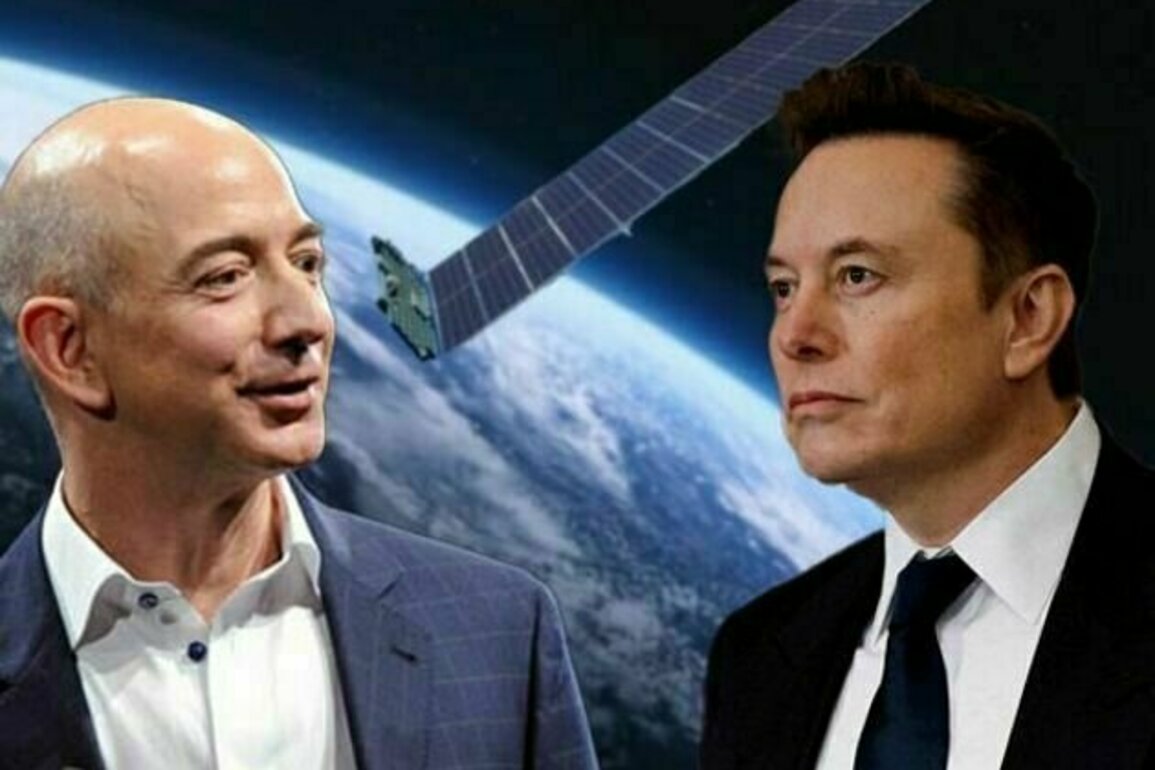
The telecoms industry desperately needs competition withMusk's Starlink, so it has welcomed NBN Co's indication to use Amazon owner Jeff Bezos' low-Earth-orbit satellite system, writesPaul Budde.
A FEW YEARS BACK, I started to talk about rapid expansion of low Earth orbit (LEO) satellite constellations is reshaping the global digital communications landscape. With satellite numbers surging nearly tenfold in a decade, LEO-based connectivity has become a dominant force in space-based telecommunications.Back in February, I mentioned the Governments initiative to also use satellite for voice-based services such as 000.
However, alongside this remarkable growth, I have also highlighted a set of challenges and considerations that will define the sustainability and effectiveness of these systems in the coming years. Last time I addressed a range of political issues this time I would like to go a bit more into the technical issues.
Australia's mobile future: Navigating the political risks of LEO satellite technologyCommunications analyst Paul Budde discusses the merits and challenges of the Albanese Government'slatest mobile coverage initiative, which utilises emerging satellite technologies.
Market drivers and technological advancements
In several of my previous articles on LEO satellite systems and initiatives likeStarlink, I've highlighted how advances in satellite miniaturisation and a flood of venture capital investment are fuelling this boom. In relation to Australia, the service now has around 250,000 subscribers.
The industry has seen a dramatic increase in funding, particularly over the past five years, accelerating the deployment of vast satellite networks. Unlike traditional geostationary satellites, which provide coverage from fixed positions high above Earth, LEO satellites operate in much closer proximity, creating dynamic, interconnected networks that enable low-latency broadband services on a global scale.
NBN Coalso indicated it will start using LEOs to follow up on its current geostationary satellites. It hasindicated the use of theKuiper systemas it will be launched byJeff Bezos(chief executiveof Amazon).This alsoaddresses anissueI mentioned previously the industrydesperately needs competition withStarlink.
The shift to LEOs is primarily driven by the growing demand for high-speed, low-latency internet, especially in underserved and remote regions in Australia and elsewhere in the world.
As I have notedpreviously, the early focus on Earth observation and remote sensing has given way to an emphasis on telecommunications, with broadband services seeing exponential growth. Farmers in Australia are one of the main beneficiaries of these new developments. As legacy television and satellite-based broadcasting decline, LEO constellations are increasingly positioned to serve as the backbone of future global connectivity.
The military also increasingly depends on LEO systems Starlink isused bythe Australian Defence Force.
But now to the more technical issues.
Elon Musk does something right and brings Starlink to all AustraliansElon Musk's Starlink satellite broadband service now covers our entire country and is delivering a reliable service.
Architectural complexities and spectrum management
Unlike traditional satellite systems, LEO constellations require intricate network designs to maintain coverage and service reliability. These new structures must contend with real-world complexities, including atmospheric drag, orbital instabilityand the ever-present challenge of collision avoidance in increasingly crowded orbital lanes.
One of the critical issues accompanying this boom is the allocation and management of the radio frequency spectrum. With a finite number of available frequencies, ensuring coexistence between competing constellations and preventing signal interference is a growing concern.
The International Telecommunication Union (ITU) plays a crucial role in coordinating frequency allocations and balancing the needs of commercial operators while safeguarding equitable access to spectrum resources for all nations.Without robust governance, the risk of spectrum congestion and operational conflicts between LEO providers could hinder the long-term viability of these systems.
Challenges of sustainability and orbital congestion
While the promise of LEO-based connectivity is undeniable, the sheer number of satellites being launched presents significant sustainability risks.
Orbital debris, an issue that I have discussed in the context of Starlink's rapid deployment, is now exacerbated by the mass deployment of satellites in low Earth orbits. While natural atmospheric drag serves as a partial mitigating factor, more comprehensive solutions for deorbiting defunct satellites and reducing space junk accumulation are, as mentioned above, much needed.
Technology and society: Navigating innovation in a fractured worldTechnological advancement bears pros and cons that not only contributed to global progress but also increased many of society's challenges.
Interestingly, Starlink has recentlyretired 800of its first satellites by burning them in the Earth's stratosphere. This will become a recurring event, with thousands of satellites needing to be retired after approximatelyfiveyears of service.We dont yet know what the impact of this will be and what the risks are.
The road ahead balancing growth with responsibility
The trajectory of LEO satellite constellations remains highly promising, offering the potential to bridge the digital divide and revolutionise global communications. However, as I have consistently argued, the industry's continued success will depend on a commitment to responsible deployment practices, sustainable orbital managementand international cooperation on spectrum allocation.
As competition intensifies and new entrants seek to carve out their share of the market, regulators and policymakers must work to ensure that growth does not come at the cost of long-term viability. On top of that, we have the massively increased risk of cyber warfare. The next decade will be crucial in determining whether LEO networks truly fulfil their promise as a transformative force in global connectivity or succumb to the very challenges they create.
Paul Buddeis an IA columnist and managing director of independent telecommunications research and consultancy,Paul Budde Consulting. You can follow Paul@PaulBudde.
Related Articles
- Australia's mobile future: Navigating the political risks of LEO satellite technology
- Demand for change to regional mobile policy growing