

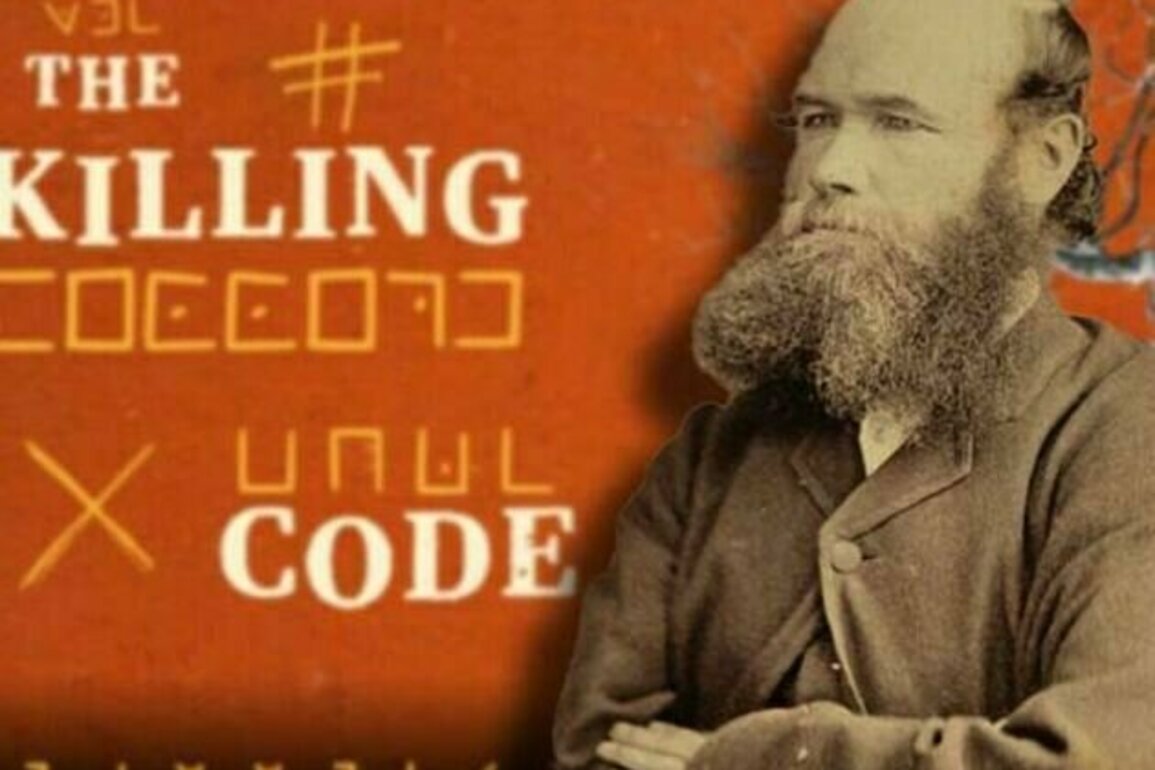
A settlers coded diary of killings is challenging Australia's comfort with its colonial past and raising new questions about who gets to control the historical record, writes DrRosemary Sorensen.
IN A LONG, many-roomed building on the main street of a pretty township in Central Victoria, theres a folksy museum housing a rich collection of stuff from colonial Australia. Especially endowed with tools and other objects from when the rush to dig out gold saw tent cities, then grand buildings, spring up with surprising speed, this museum is run by a dedicated historical society.
Visiting to find out if they might be interested in teaming up with another such museum to maybe display some of their most curious and interesting items at an arts festival in the neighbouring shire, Im impressed by the committee group, led by a man of considerable energy and apparent intensity. I wander along the aisles, stuffed with everything from the faded photographs of the men who found huge chunks of gold, to guns quite a few guns to clothing, to household items and toys.
Right at the back, theres a corner devoted to a mishmash of Indigenous artefacts and artworks, which I mentioned to the president as he was accompanying me out the door. The conversational mood shifted, wariness replacing comfortable chat. Then it changed again. Bombast.
Myall Creek Memorial marks 25 years amid ongoing silence on Frontier WarsOn its 25th anniversary, the Myall Creek Memorial stands as a quiet rebuke to the national silence surrounding Australias Frontier Wars.
Apparently, this bloke knows better than anyone, better, indeed, than do-gooder historians and the local Indigenous organisations, about Aboriginal history. Ive researched it, he says. They dont like me much, but Ive got the research to prove what I say.
It was a dreary, wet afternoon, the day I visited that museum. I left to drive the grey road fogged with drizzle, feeling like Id just been soaked in sadness. It got me thinking: What is it about men who do a bit of reading and decide they know it all? And why does amateur history attract cranks, bigots, conspiracy theorists and writers of little talent?
Same thoughts rose to the inky surface as I read the brilliant work byThe GuardianjournalistsSarah CollardandElla Archibald-Binge, along with ProfessorLorena Allamfrom the Jumbunna Institute for Indigenous research at the University of Technology, Sydney.
The Killing Codeis part of their long-running Killing Times web project documenting the history of Australias frontier wars a University of Newcastle collaboration with funding support, it should be mentioned, by theBalnaves Foundation(three cheers to them).The Killing Codeis the story of Western Australian pastoralistMajor Logue, who noted in his day-to-day diaries dating from the early 1850s how and when he murdered Yamatji people. He used a simple code, called Pigpen, to disguise these facts so that his 50 years of diary writing would not immediately incriminate him.
There is no doubt that the diaries exist (or existed, the unidentified descendant owner claims to have now destroyed the original leather-bound ledgers) because the microfilm copies made in 1955 are available to read in the State Library of Western Australia, codes and all. Geraldton-based historianNan Broadread the originals when she was researching a PhD in the 1990s and could see, she told The Guardian, that 50 years of colonial diary was worth publishing, in all its tedium about cattle, breakfasts and station business. Her copies were made with the help of Geraldton Library, and she planned to transcribe and publish. But heres the bit that really rattles.
To protect the person who holds the diaries we felt it was... expedient , perhaps, to not have that in writing, Broad toldThe Guardian, referring to all the sections in which Logue wrote about frontier killings.
History wars fought to avoid cultural amnesiaHistorians have a responsibility to preserve the story of our nation the good and the bad despite how many conservative feathers may get ruffled.
Sections such as:
Nan Broadsaysshe supports truth-telling, but also supports her publishers decision to leave out Logues own evidence about killing people:
The publisher isPeter BridgeofHesperion Press, which has a bookshop, according to the website, at the rear of 65 Oats Street, Carlisle, Western Australia. Specialising in exact transcriptions of diaries of exploration in Western Australia, Hesperian is also currently working on an index of the names of settlers who came to the Swan River settlement of Western Australia between 2nd June 1829 and 14th November, 1829.
Bridge replied toThe Guardians questions about why the coded sentences are being removed from the intended publication by suggesting they are simply unprintable:
War Memorial makes little effort to recognise Frontier WarsThe Australian War Memorial is still failing to acknowledge the Frontier Wars as an important part of our history.
Andheres the bitthat reminded me of that grey day among the dusty stuff of the cluttered historical museum:
It's a pity to focus on this aspect of The Killing Code when the whole feat of reporting is a must-read. The descriptions of meetings between the descendants of Logue who want the truth to be told and the people of the Naaguja Yamatji country where the massacres took place are very fine, impossible not to be moved by. One of them,Theona Councillor, calls out to descendants of settler families to stop clinging to a false narrative and suggests they add the Black history in there, and be brave enough to hear it.
Seems like a reasonable request.
Back when the culture wars were making merry headlines and PMJohn Howardfound it useful to catch the termblack armband historyand scuttle to the try-line, I was (temporarily) employed at the ABC and was among those summoned to throng around the PM who was visiting so we could hear his brief address. I went, wearing a strip of black ribbon tied around my upper arm over my white shirt. I recall it now, bemused at my younger selfs weak courage.
Even if John Howard didnt notice this pathetic little gesture, maybe the ABC hierarchy did. The employment was certainly temporary.
DrRosemary Sorensenis an IA columnist, journalist and founder of the Bendigo Writers Festival.