

Australias token gestures of reconciliation ring hollow while Papua New Guinea, our closest neighbour and former territory, remains sidelined and silenced, writesMichael Cohen.
AUSTRALIANS HAVE GROWN used to acknowledgements of Country.
In Sydney, a city remade in the image of London, where almost no visible trace ofGadigalculture survives, meetings begin with words to elders past and present. The Gadigal are the traditional custodians of central Sydney the business district and the inner suburbs. Posters and billboards remind us that we are on Gadigal land, though most Sydneysiders have never met a Gadigal person or could name a single tradition.
But in all this performance, something is missing. We talk about Indigenous dispossession. What we dont talk about is a whole nation with whom we share not only history and culture but a direct border: Papua New Guinea.
At its narrowest, the Torres Strait is just 3.7 kilometres wide. Under theTorres Strait Treatyof 1978, traditional communities can still cross those waters for cultural and family reasons. Our neighbour is that close and yet in everyday Australian life, it might as well be invisible.
Deadly threat of unexploded bombs in the Pacific persists 80 years onEighty years after WWII, Solomon Islanders face the ongoing threat of death and injury from hidden, unexploded bombs.
For most of the last century, Papua New Guinea was governed from Canberra. Australia took over German New Guinea after World War I under aLeague of Nationsmandate, later extended by the United Nations. Papua, annexed by Britain in 1888, had already been handed to Australian rule in 1906. Independence only came in 1975.
As historianHank Nelsononce wrote:
Today, PNG has around 10.76 million people the largest population in the Pacific. And yet it barely registers in our national conversation. TheLowy Institutefound that Australian media coverage in 2018 focusing on the Pacific was extremely low.
The Torres Strait makes this forgetting absurd. For centuries, people crossed it freely trading canoes, tools and food; intermarrying; sharing languages and traditions.
AnthropologistJeremy Beckettcalled it a highway of exchange, one that bound northern Australia to New Guinea rather than dividing them.
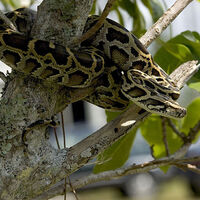
Even the land refuses the separation. Northern Queensland and PNG share species found almost nowhere else: cassowaries, tree kangaroos, cuscuses, even riflebirds a type of bird-of-paradise. Mangroves and coral reefs straddle the border, too. Geography doesnt recognise the neat lines we draw on maps.
The double standard is clearest in migration. One in three Australians today wasborn overseas, mostly from India, China, or New Zealand. Yet only about 40,000 Papua New Guineans live here. Even theSeasonal Worker Program, set up to attract Pacific labour, brings in fewer than 2,000 people from PNG each year. Visa categories and income thresholds all but shut PNG citizens out. This isnt an oversight. Its a system designed that way.
BOOK REVIEW: Girt By Sea: Re-Imagining Australias Security'Girt by Sea: Re-Imagining Australia's Security' is a first-rate guide for any Australian wishing to understand ourcurrent national security.
And the imbalance looks harder to defend when you set need against capacity. Nearly40 per centof Papua New Guineans live below the poverty line, while Australia remains one of the least densely populated countries on Earth.
The claim that PNG citizens would be an impossible burden speaks volumes. What it reflects is a refusal to imagine Papua New Guineans as part of our society even though geography and history tie us more closely to them than to many other migrant groups. Behind all this lurks the same racism that has been present in Australia since European settlement.
When PNG does make it onto the political agenda, it is almost always as a tool. Australias official development assistance to PNG is estimated at$637.4 millionin 202425, with around $500 million set aside for bilateral aid in 202526. The money matters, but in Canberra it is almost always framed as leverage, not obligation.
Defence treaties are presented in the same way. The2022 security pactwas pitched as protecting our northern approaches, not supporting PNGs sovereignty.
And then there isManus.
From 2001, successive governments used PNG as a dumping ground for people they would not accept.
As legal scholarSusan Harris Rimmerhas written:
All of this exposes the limits of our reconciliation. We congratulate ourselves for our token recognition of the Gadigal in central Sydney, yet treat Papua New Guinea as an afterthought. Real acknowledgement of our closest northern neighbour would demand more than symbolic gestures. It would mean policy changes, genuine inclusion and shared responsibility.
If we have remorse for our colonial past, it cannot stop at the shoreline. It must extend to those across the Torres Strait to the people we once governed, to the land and waters that connect us, and to a relationship that is still defined by neglect.
Until we see Papua New Guinea not as a buffer, not as a detention site, but as a neighbour bound to us by history and geography, the sincerity of all our talk of reconciliation will remain dubious.
Michael Cohenis a Sydney-based Jewish Australian writer who previously contributed extensively to international newspapers, offering both articles and conceptual material. He now focuses on human rights issues.
Related Articles
- Sumgilbar people in PNG triumph over foreign mining company