

A landmark new book, expanding on Rachel Perkins acclaimed documentary, confronts the truth of the Frontier Wars the violence, resistance and silence that defined Australias colonial past, writes DrDavid Stephens.
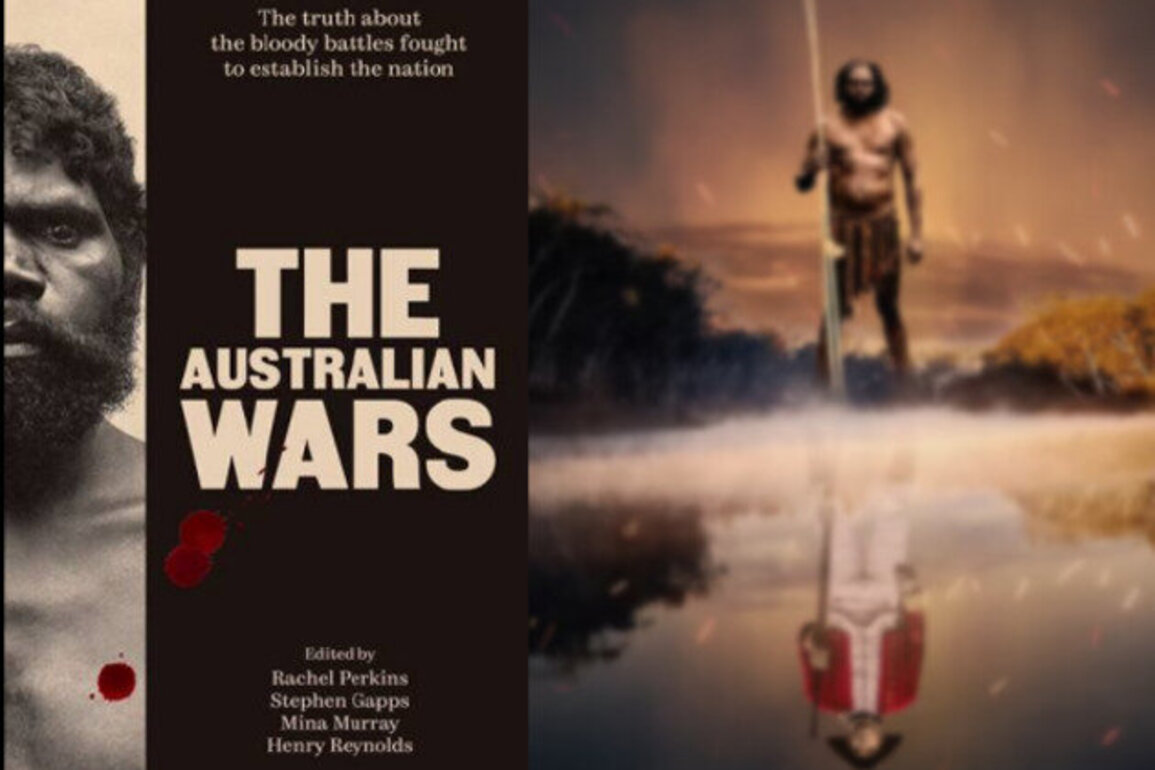
THE AUSTRALIAN WARSis long-awaited, following the SBS/NITVdocumentaryof 2022. The book is edited byStephen Gapps,Rachel Perkins(Arrernte-Kalkadoon),Henry Reynoldsand Mina Murray (Wiradyuri), published by Allen and Unwin on 4 November, and in three parts: 1788-1830, 1830-60 and 1860-1930.
Perkins provides an introduction, Murray the opening chapter and a conclusion, and Reynolds another conclusion and three overviews. First Nations authors introduce ten geographical areas. Detailed accounts of each area follow, with previously published historians well-represented. There are breakout sections on the 1789 Sydney smallpox outbreak, Indigenous women, resistance warfare, battles and massacres, and theNative Police.
The maps are clear, and the illustrations mix the familiar and the less so. There are almost 400 pages, inside a handsome hardback with a startling cover.
The book is full of passion and evidence. It is crucially important to a nation confronting its Black and White history.
War Memorial makes little effort to recognise Frontier WarsThe Australian War Memorial is still failing to acknowledge the Frontier Wars as an important part of our history.
The book has three main themes. First, the spread of the settler-invaders, their diseases, weapons and stock, cattle and sheep, stealing First Nations land and eating the grass that had fed the animals First Nations hunted.
Port Phillip District squatterNiel Blackin 1839 summarised:
Change came rapidly. For example, in Victoria in 1851, there were 77,345 Europeans, 391,000 cattle and 6,590,000 sheep. By 1861, Victoria had 540,000 Europeans, while the Indigenous population had declined to around 2,000 from perhaps 60,000 before the Whites arrived and 15,000 in 1851.
Queenslands White usurpation and Aboriginal resistance was, writesRaymond Evans, the bloodiest in Australia and one of the larger land grabs of the British crown anywhere. Queensland saw the extensive and brutal use of Native Police, with White officers, a former officer writing in 1879 that the force carries out its sanguinary will without the intervention of judge, jury or law.
In New South Wales, as settlement extended from Sydney, Whites used terra nullius, saysRhonda Dixon-Grovenor(Gadigal/Bidjigal/Dharug/Yuin), as a way to justify the violence, murder, massacres and removal of Aboriginal people so that they could steal our land. Gapps describes the 50 years of First Nations resistance that followed.
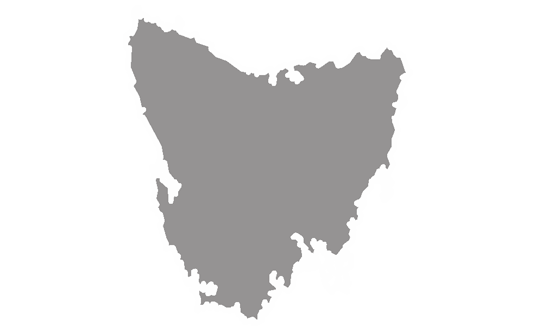
In Tasmania, First Nations dead were fewer, but the colonial government's strategy was perhaps more brutal than elsewhere. In Western Australia and the Northern Territory, the massacres and resistance came later, but the First Nations numbers killed were often higher than in the south. South Australia and the Torres Strait had their unique stories.
Myall Creek Memorial marks 25 years amid ongoing silence on Frontier WarsOn its 25th anniversary, the Myall Creek Memorial stands as a quiet rebuke to the national silence surrounding Australias Frontier Wars.
Second theme: the blind eyes, euphemisms and justifications that allowed Whites (though not all of them) to create what anthropologistWEH Stannerlater famously calledthe Great Australian Silence. While some, writes Gapps, admitted to killing Aboriginal people, few colonists ever mentioned the scale of the killings.
The First Nations deaths hidden were often in great disproportion to a shepherd, squatter or sheep being avenged evidence from Queensland in the second half of the 19th Century suggests around 44:1. Dispersal was a common euphemism for murder.
After seven Whites were hanged for theMyall Creek Massacrein 1838, other Whites said less about killings they had perpetrated, helping set a trend for the future. Reynolds andChris Owenargue that our Federation Fathers lacked regret about and did not mourn the deaths of First Nations people. Nor did they understand the cultural loss to Australia from these deaths. First Nations,after all were primitive people whom history had left behind... .
Third theme: whether what happened was war. Arguing that the Australian Wars were not war requires spurious comparisons with Gallipoli, D-Day and other occasions where masses of well-armed troops attacked foreign enemies.
Henry Reynolds responds:
As Reynoldssaidin the Australian Wars documentary:
Ray Kerkhovesays, all the elements of classic guerilla warfare occurred across Australia. But there were also pitched battles. Murray describes the First Nations weaponry used, Gapps the strategy and coordination of resistance across tribal homelands: 1838 signalled [in New South Wales and Port Phillip] the beginning of arguably the greatest military counteroffensive on Australian soil in Australian history. Squatter Thomas Browne in 1840s Port Phillip characterised Indigenous attacks on settlers as the Eumeralla War and guerilla warfare.
War Memorial's ignorance of Frontier Wars must endThe Australian War Memorial fails to recognise conflicts between First Nations people and colonists within our own country.
What to do now about this war for our nation?Richard Frankland(Gunditjmara) writes of the absolute necessity of institutions such as the Australian War Memorial to include the Frontier Wars as a pivotal and integral part of the conflicts/wars that involved Australians. Of Tasmanian dead alone,Greg Lehman(Trawulwuy) says, Their story is at least as important as the survivors of any other of our defining wars, and should reach deep into the heart of our nation.
The number of dead can never be known.
Says Perkins:
First Nations deaths were between 20,000 the War Memorial has accepted that figure for decades and 100,000, including women, children and old men. Around 3,000 settlers, police and militia were killed.
Seeing the rushes of Perkins The Australian Wars documentary in August 2022 encouraged DrBrendan Nelson, the then chair of theAustralian War Memorial Council,to say:
The Anglo-Celtic, mostly male, conservative commemoration mafia, plus the Nationals, the Murdoch press andSky, then noisily saidNoto the Memorial commemorating anyone not wearing an Australian military uniform. The Memorial Councils decision of 19 August 2022 was so qualified that it made little sense as a guide to action.
The Memorial has struggled since 2022 to take a firm, brave position on the Australian Wars, despite someencouraging noisesfrom Nelsons successor as Council Chair,Kim Beazley. This book should help the Memorial and other commemorative institutions recognise there is no difference between men and women going overseas to defend Australia and, on the other hand, First Nations people defending their Country Australia, on their Country.
The famous words, Lest We Forget, appear at the beginning of this book. Those words confront our shared history. The Australian Wars were the foundation of modern Australia.
DrDavid Stephensis editor of theHonest History websiteand a member of theDefending Country Memorial Project, campaigning for the Australian War Memorial to properly recognise and commemorate the Australian Frontier Wars.