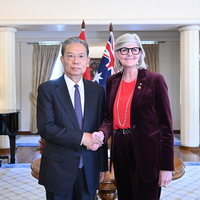


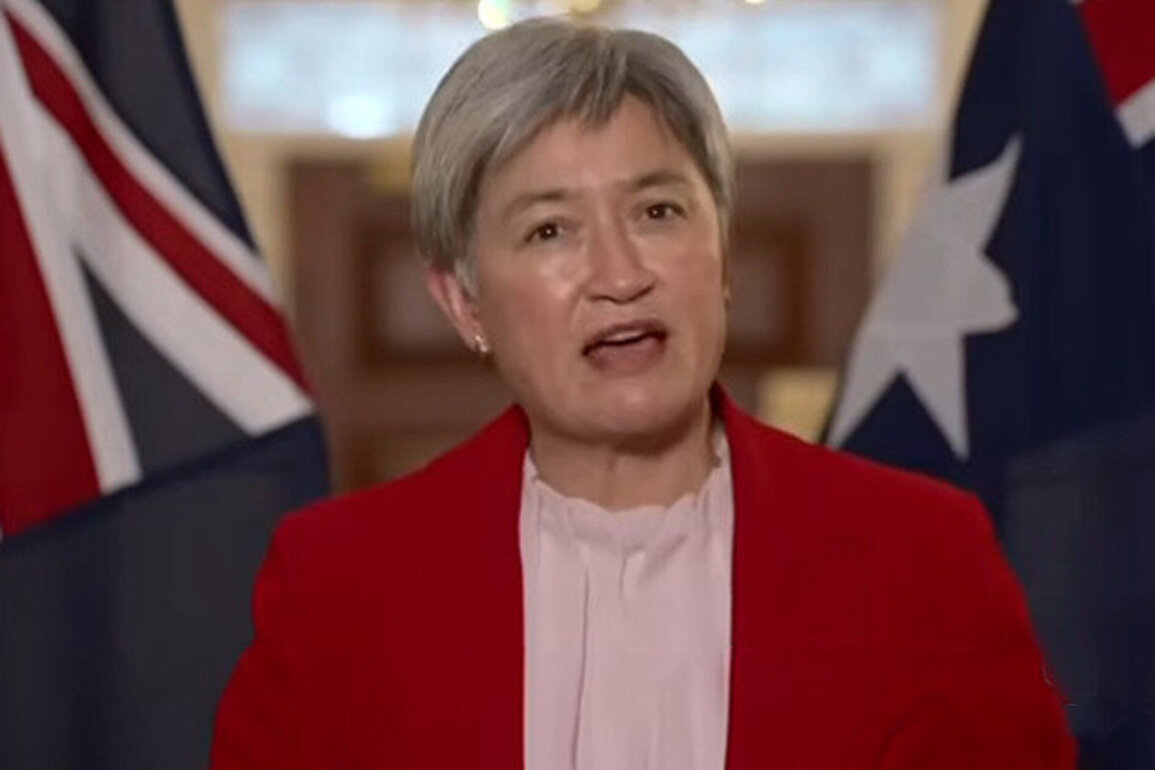
Penny Wongs cautious diplomacy reveals Australias struggle to balance loyalty to the U.S. with the need for genuine independence on the world stage, writesMark Beeson.
IT CANT BE EASY being Australias foreign minister. Even the clever ones, of which there have been a few, must find it difficult to square circles and maintain a consistent line in the face of changing geopolitical conditions and the oftencatastrophically ill-judged policiesof the United States, our presumed protector.
PerhapsPenny Wongwill follow the lead of some of her morethoughtful predecessorsand rediscover her independence and integrity when she is free of the strictures of party solidarity. In the meantime, she will have to choose her words carefully, something shes very good at.
A recent, largely unnoticedspeechto theAustralian Institute of International Affairsis a good example of the genre. On the plus side, there are some welcome, if boilerplate-ish, nods in the direction of regionalism and the continuing importance of multilateralism. To be fair, Senator Wong has been tireless in meeting her counterparts in the Indo-Pacific region. Good for her. Jaw-jaw really is better than war-war, as ourSoutheast Asian neighboursremind us.
Australias record is less impressive. On the contrary, there havent been many wars, no matter how far away or strategically tangential, that Australian policymakers havent rushed to take part in, even without being asked. As a newly independent and nervous outpost of British colonialism, perhaps the folly of World War 1 can be understood if not forgiven. But Vietnam, Iraq, Afghanistan? We evenbombed Syria.
Australia caught in the fool-based international orderWith the Trump Administration causing global chaos and disrespecting allies, surely the time is right to rethink our allegiance to the U.S.
Perhaps its just hard to resist the temptation to use all that expensively acquired military hardware once youve got it. That doesnt bode well for themuch-maligned AUKUS project, of course, but given that the nuclear-powered not nuclear-armed submarines are never likely to arrive, perhaps it doesnt matter. Were building a base for American and British subs and paying for the refurbishment of their shipyards, after all, so were sure to be safe, despite being a nuclear target.
These awkward realities are glossed over or ignored in Senator Wongs recent speech, which suggests that the U.S. remains our closest ally and that the Indo-Pacific would not have enjoyed long periods of stability and prosperity without the United States and its security guarantee to the region.
This may come as news to the 2 million or so Vietnamese who died in the American War, but whos counting? There are somegreat investment opportunities in Vietnamnow, after all, which wouldnt have happened if the communists had won. Oh, hang on, better fact-check that.
An even more unfortunate reality for what Senator Wong calls amplified middle power diplomacy is that our principled positions are being systematically trashed by our increasingly erratic, unpredictable and undemocratic great and powerful friend.
As Wong rightly points out:
Even if we gloss over Americas fondness for unilateral wars of aggression when deemed to be in its strategic interest, the leader of what used to be called the free world is trying to negotiate a war-ending deal thatrewards the aggressor and punishes the victim. If ever there was a moment for a bit of amplified middle power diplomacy, this ought to be it. Dont hold your breath.
U.S. admits Australia a vital cog in America's war machineA U.S. official has opened up about America's military intentions for Australia and it's importance in the AUKUS security pact.
The reality is that, despite endless talk about the potential of creative middle power diplomacy, we lack the fundamental prerequisites: independence of thought and action. Not only are we home to a growing array of American military assets that lock us into whatever harebrained policy emerges from the White House, but Australian policymakers and their advisors are simply incapable of thinking the unthinkable and becominga genuinely sovereign nation.
Consequently, no Australian government can even have a frank discussion with the population it claims to represent about the implications of our foreign policy, our relationship with the United States, or our hypocritical attitude to our Pacific family, who are destined to disappear beneath the waves because of our continuingexpansion of fossil fuel projects. As Senator Wong points out, being a part of the solution on climate changeis also central to our credibility in the Pacific. I was wondering where it went.
Meanwhile, China will continue trying to reshape the region according to its own interests. Yes, theres always a looming threat that justifies all the improbable, compromised and unjustifiable actions we take to prop up Americasebbing hegemony, whatever form it takes. The unspeakable reality is that our political leaders seem to hope they can wait out the Trump Administration and geopolitical business as usual will return.
Even if Trump doesnt have a third term, we in this case, the human race will have to deal with a growing tide of authoritarianism, unaddressed climate change, entrenched spheres of influence and the very real possibility that the U.S. willno longer be a democracy, or not one worthy of the name, at least. Still, maybe Vice PresidentJD Vanceand Secretary of DefencePete Hegsethwill sort things out. What could possibly go wrong?
But if even mentioning Trump in an uplifting after-dinner speech proved difficult, saying something about his possible successors might really have darkened the mood. Why spoil a nice evening when we cant do anything anyway? Time for another glass of wine.
Mark Beesonis an adjunct professor at the University of Technology Sydney and Griffith University. He was previously Professor of International Politics at the University of Western Australia.