


Christopher Burke
Download PDF
Dec 15 2025
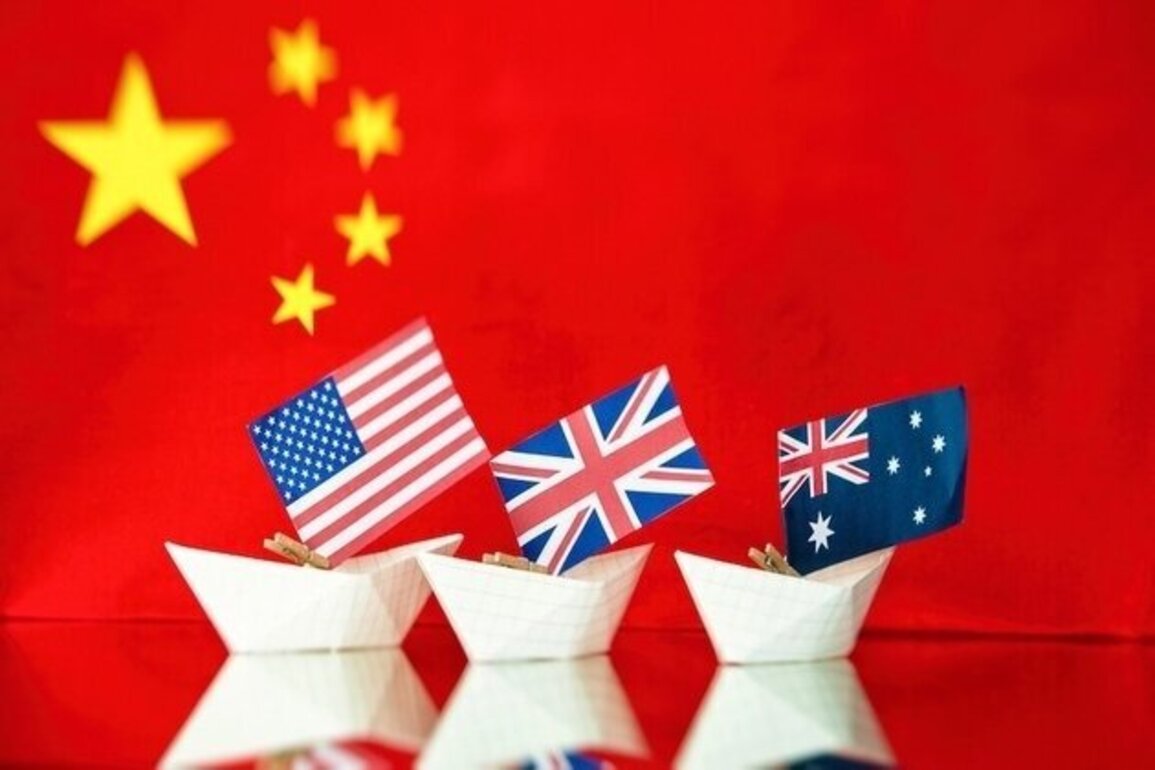
romatitov626.gmail.com/DepositphotosThe Trump Administration recentlyreaffirmed support for AUKUSthe high tech security pact between the US, UK and Australia initially unveiled in 2021 under the Biden Administration.The proliferation of strategic groupings in the Indo-Pacific from AUKUS, to the development-focused Quad, appear confusing, but this dual architecture is not a sign of redundancy. It is the deliberate design of a sophisticated, multi-layered strategy tailored to meet the regions immense security and governance demands. AUKUS and the Quad provide a shield and outreach in an integrated system that maximizes both deterrence and diplomatic engagement. While this analysis places emphasis on Japan and Australia, it sits within a broader architecture involving multiple partners with roles essential to the systems overall effectiveness. This coordinated, dual-track approach ensures stability suggesting hard-power deterrence is necessary, but acknowledges that power alone is ultimately insufficient for long-term regional peace.
AUKUS, the trilateral security partnership comprising Australia, the United Kingdom (UK) and the United States (US), is explicitly concerned with high-end military and technological integration. It serves the vital purpose of assured deterrence by imposing costs on potential adversaries and maintaining a stable balance of power, thereby establishing the secure strategic foundation upon which broader regional cooperation can operate. The pacts primary objective is to impose costs on adversaries and maintain the balance of power to establish a secure strategic foundation, with the United States providing overarching strategic and technological leadership and the United Kingdom contributing critical undersea, nuclear and systems-integration expertise alongside Australia.
The foundation is built on tangible capabilities including a flagship initiative to support Australia in the acquisition ofnuclear-powered submarinesand a commitment to the collaborative development of advanced military technologies involvingartificial intelligence (AI)andhypersonics. The pacts focus onPillar II technologies(AI,quantum,cyber) creates immense opportunities for all nations involved. This targeted, high-end cooperation ensures the alliance maintains the technological edge necessary to preserve peace and ensure the entire system remains secure for partners.
The Quad, comprising the US, India, Japan and Australia, operates as the cooperative complement to hard-security arrangements. The non-military forum focuses on non-traditional security issues and the provision of public goods. The September 2024Quad Leaders Statementreaffirmed the blocs commitment to secure maritime routes, resilient critical-mineral supply chains, climate adaptation, and trusted digital infrastructure. By emphasizing quality infrastructure, standards and transparency, the Quad secures the diplomatic legitimacy that a pure security pact cannot achieve. It provides the essential mechanism for engaging the broader region by offering a development-first alternative to debt-laden financing. This distinction is crucial for strategic coherence.
The framework allows India to remain fully committed to cooperation in areas such as maritime domain awareness and fisheries governance through initiatives including the Indo-Pacific Oceans Initiative and theSecurity and Growth for All in the Region (SAGAR)initiative launched in 2015. These mechanisms anchor the Quads relevance across the Indian Ocean and the Global South, reinforcing Indias role as a central maritime and regional partner. It also enables Japan to draw on decades of expertise, financial strength and its commitment toQuality Infrastructure Investmentto help shape the regions economic trajectory, reinforcing its central role in setting regional standards. At the same time, the United States underwrites many of the Quads convening, coordination and security-adjacent initiatives, providing the institutional weight and continuity that sustain the frameworks broader strategic impact.
The effectiveness of this architecture lies in the integrated logic and deliberate division of labour. At the core is a clear-eyed recognition that resource competition and climate instability act as powerful threat multipliers, shaping security risks well beyond the military domain. Rather than treating these pressures as secondary issues, the hybrid AUKUSQuad framework embeds them directly into the strategic design, aligning deterrence with longer-term resilience.
Within this arrangement, AUKUS provides the hard security foundation by safeguarding the maritime commons and maintaining a credible balance of power. Operating alongside, the Quad focuses on building the infrastructure, standards and governance systems that allow societies to function and prosper within that secure environment. Together, they transform military influence into practical institutional outcomes, shaping behaviour through rules, norms and shared economic interests rather than force alone. This duality also plays an important diplomatic role. The Quads explicit focus on climate, development and public goods preserves a non-contentious channel for cooperation and helps manage sensitivities among partners. It reinforces the value of Japans long-standing strengths alongside complementary contributions from other Quad partners in non-military engagement, quality infrastructure and development finance; clearly demonstrating that strategic alignment is not only about defence capabilities, but sustained, constructive leadership shaping the regions future.
The integrated approach is particularly vital for partners such as Japan and Australia, working in concert with the United States, India and regional stakeholders, as they consider opportunities to extend their strategic interests beyond the Indian Ocean. This extension does not imply a formal expansion of Indo-Pacific institutions into Africa, but reflects the practical reality that supply chains, maritime security and standards-setting now link the Indian Ocean littoral to East Africa in a single strategic system. The ports, sea lanes and mineral corridors in East Africa for examples represent a critical node connecting the Indian Ocean to global markets.Australias 2023 Defence Strategic Reviewhighlighted the importance of Indian Ocean security and resilient maritime routes.
Cooperation in the region, combining Japans financial and technological capabilities with Australias mining, agricultural and governance expertise; directly addresses shared strategic interests in securing stable, transparent and resilient partners. The joint commitment to sustainable engagement manages geopolitical risks, using high-quality development to secure long-term strategic access and influence.
The dual architecture of AUKUS and the Quad is a strategic necessity that benefits all partners. Australia and Japan derive particular value, securing their regional flank while gaining the strategic space to pursue shared, cooperative objectives across a wider and increasingly connected geopolitical landscape. The logic reflects the reality that regions such as East Africa are now integral to an expanded Indo-Pacific. This duality ensures that contemporary stability rests on two complementary pillars: A credible security shield provided by AUKUS and a broad, inclusive outreach delivered through the Quad. Together, these tracks reinforce deterrence while sustaining the diplomatic legitimacy and cooperative engagement required for long-term regional order.
Further Reading on E-International Relations
- Indias QUAD Strategy
- Revitalizing the Commonwealth Framework: A Political Tool for Australia and the UK?
- Should There Be a New Grouping for the Non-Nuclear Five of South Asia?
- Opinion A Weakened Quad?
- Opinion IOR First: Why Indias Indo-Pacific Ambitions Depend on Regional Primacy
- AUKUS: Recalling Legacies of Anglo-Saxonism and Muffling the Voices of Island Nations
About The Author(s)
Christopher Burkeis a senior advisor at WMC Africa, a communications and advisory agency located in Kampala, Uganda. With over 30 years of experience, he has worked extensively on social, political and economic development issues focused on governance, extractives, agriculture, public health, the environment, communications, advocacy, peace-building and international relations in Asia and Africa.
TagsAUKUSQUAD