

Australia counts female DV deaths, but it doesnt count DV-linked male suicides, writesDrAlex Vickery-Howe.
AUSTRALIA'S DOMESTIC VIOLENCEsystem is built on ideological assumptions, outdated behavioural models, and blind spots in national data collection that render male victims effectively invisible. When institutions cannot detect the types of DV harm men disproportionately suffer reputational abuse, systems abuse, and misidentification the result is not neutrality, but structural injustice.
The harm the national system does not see
Across Australia, the entire domesticviolence architecture is built around a single dominant narrative: that DV is overwhelmingly mens violence against women. That narrative is real and must remain central. But it is not the whole picture.
Male victims whose experiences involve reputational destruction, systems abuse, administrative misuse, or misidentification sit entirely outside the national policy imagination. They are not named, not measured, not represented in policy discourse, and not believed by law enforcement.
The Commonwealths principal frameworks ANROWS research, AIHW summaries, ABS Personal Safety Surveys reflect and reproduce a worldview in which malepattern victimisation is not considered a meaningful class of harm. The result is a nationwide system that cannot see, count, or support male victims.
How national data architecture blinds Australia
At the national level, Australia collects no data on:
- misidentification by police;
- role reversal (i.e., victims incorrectly accused and recorded as perpetrators);
- systems abuse, including the weaponisation of institutions through false allegations;
- indirect aggression and reputational sabotage;
- DVlinked suicide; and
- administrative misuse (AVOs, DVOs, DFFH interventions, court reports).
The ABS Personal Safety Survey does not measure these patterns.
AIHW cannot report on them because they are not collected.
ANROWS evidence base does not analyse them because they sit outside its ideological frame.
When your national data collections exclude the variables that would reveal malepattern victimisation, the resulting picture is guaranteed to be incomplete. Australia finds little evidence of certain patterns only because it simply does not measure them.
A nation that doesnt count a class of victims will inevitably find little evidence for harm suffered by that class.
In this case, that class is 50 per centof the population.
When the system becomes the abuser: A domestic violence survivor's accountThis is the anonymous story of a survivor of domestic violence who sought help and was met with disbelief, negligence, and institutional failure at nearly every turn.
The behavioural science the Commonwealth ignores
International psychology literature consistently shows that:
- men disproportionately use direct aggression; and
- women disproportionately use indirect aggression reputationbased, thirdpartydependent, and institutionally mediated.
Australias national DV risk frameworks, including ANROWS guidance and statebased risk tools derived from it, only detect maletypical aggression.
They do not measure indirect aggression at all.
Yet indirect aggression is precisely the behaviour pattern that maps onto:
- false allegations;
- reputational destruction;
- systems abuse;
- weaponisation of police, courts, and childprotection agencies; and
- coercive control as enacted through institutions.
NSW and Queensland criminalised coercive control in recognition of these broader harms yet still fails to measure the very patterns of coercion that disproportionately harm men.
A national system that measures only one genders aggression pattern will always discover only one genders victimisation.
When ideology replaces evidence nationally
State-level domestic violence peak bodies, such as DVNSW, are explicitly and unashamedly gender-biased in their framing of domestic violence. DVNSW is not an outlier it is the statelevel mirror of a broader national problem.
Australias publicly funded domesticviolence policy ecosystem is overwhelmingly shaped by:
- ANROWS genderideological research frameworks;
- womencentric peak bodies;
- feministaligned academic institutions; and
- Commonwealth funding tied to genderexclusive service definitions.
This creates portfoliolevel capture, where:
- national policy conversations begin from a gendered assumption;
- alternative patterns of harm are treated as deviations or impossibilities;
- research funding reinforces the narrative rather than testing it; and
- and male victims become the blind spot everyone can safely ignore.
The effect is national in scope: Australias domesticviolence machinery gaslights male victims.
Not by deliberate deception, but by structural design: their experiences fall outside the authorised story so their survivor stories are ignored, they are distrusted or accused of lying, frontline police assume they are trying to create a false alibi when they report abuse, they are told that their abuse doesn't exist.
Institutional disbelief and misidentification across Australian jurisdictions
I have first-hand experience of this misidentification in NSW, but the pattern is identical in every state and territory:
- Police treat male firstreporters as presumptive perpetrators.
- Counterallegations from women are encouraged, facilitated, and given immediate legitimacy.
- Male evidence is sidelined or ignored, and evidence is not collected or reviewed.
- For male victims, protection orders against their female abusers become a shortcut to "mission complete", not the beginning of an investigation.
- Corrections and oversight bodies protect the system, not the truth.
Because no jurisdiction measures misidentification and no national framework instructs them to the same failure repeats across Australia.
Male victims in Queensland, Victoria, WA, and the ACT report identical experiences - the moment a male victim reports abuse, they are treated as offenders. No investigation. Just a gender-based assumption.
Australia has created an interlocking national system of institutionalised misidentification because it has created a national system that only recognises one genders victim profile.
In the bad old days, a female reporting a sexual assault would be asked critically, "What did you do to encourage him?" or "What were you wearing?". We all now cringe at such historically shameful victim-blaming.
Yet the equivalent for a male reporting domestic violence by his partner now is not being treated with cynicism and critical questions a male reporting DV risks being reflexively disbelieved, having his abuser be encouraged and given the opportunity to make false and retaliatory accusations, and then the real victim is charged with a crime and prosecuted.
Even in the worst-case scenario, victim blaming of female victims very rarely rose to the level of prosecuting the victim, but that is commonplace for male victims in Australia today.
The deaths Australia refuses to count
Australia publishes detailed annual counts of female intimatepartner homicide. We lose approximately 50 women a year (almost 1 a week) to domestic violence. Every one of these is a tragedy, and we should be doing anything we can to prevent these horrific deaths. The men who commit these crimes should be punished to the full extent of the law.
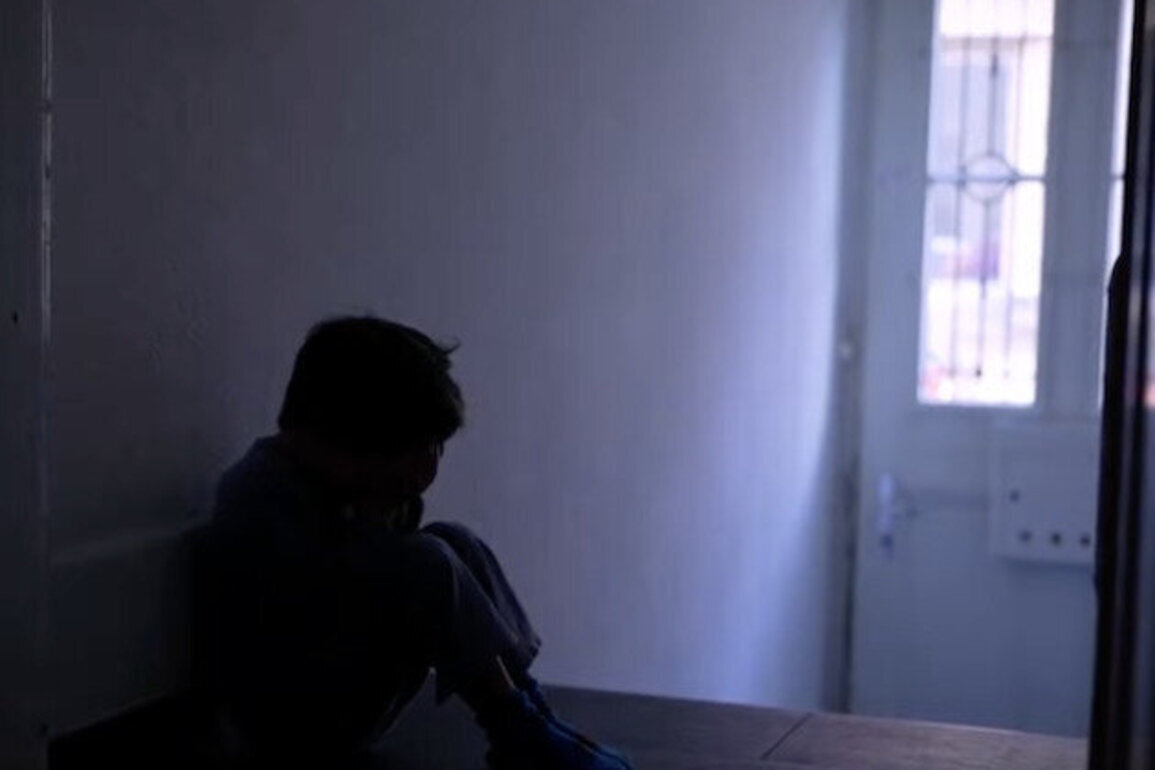
Australia also loses just over 2,400 men each year to suicide. We dont know how many of them are caused by domestic violence, because we dont measure, count or report those statistics. The women responsible cant be punished or prevented from re-offending, because our DV system fails these victims so completely.
Australia:
- does not count DVlinked suicides;
- does not collect DV antecedents in national coronial coding;
- does not map coercivecontrol trajectories to suicide outcomes; and
- does not include DVrelated male suicides in its DV death statistics.
As a result, the Commonwealth behaves as though 0% of suicides are related to domestic violence a statistically implausible assumption that would be unacceptable for any other major harm category.
Even a conservative three per cent attribution suggests that Australia may be losing as many men to DVlinked suicide as we lose women to intimatepartner homicide.
Suicide is the national fatality pathway for male DV victims but because Australia refuses to measure it, male deaths are quietly administratively erased.
A country that counts only one mode of fatality will always conclude that only one gender is dying.
Justice without gender at a national scale
A national justice system cannot ration protection by gender and still claim legitimacy.
Australia cannot continue to:
- fund genderexclusive peak bodies;
- produce genderfiltered data;
- equip police with genderbiased tools;
- ignore malepattern victimisation;
- erase DVlinked suicides from its mortality ledger;
and then declare itself committed to all victimsurvivors.
A national reform principle is needed:
Investigate all allegations.
All genders. All patterns. All cases.
Australia must replace ideology with evidence, and narrative with inquiry.
Healthy masculinity key to solving DVIs a challenge to patriarchy's toxic masculinity the key to solving DV?
National reforms Australia must implement
To align with bestpractice evidence and to restore legitimacy, the Commonwealth should:
Add a DFSV antecedent flag to national coronial data
AIHW and ABS must jointly code basic DV indicators in suicide cases.
Fund malevictim services and a national malevictim advocacy peak
Plural peaks protect against ideological capture.
Reform national DV research funding through ANROWS
Require inclusion of misidentification, role reversal, systems abuse, and indirect aggression.
Create a national DVSATB for crossallegations
Every police jurisdiction should be required to assess systems abuse and reputational harm.
Train all Australian police forces in indirect aggression and misidentification patterns
A national curriculum is needed.
Publish national misidentification metrics
Without measurement, nothing changes.
A justice system that sees every Australian victim
Australias story about domestic violence has been shaped by good intentions but it has become incomplete, exclusionary, and empirically unsustainable.
Women must be protected from suffering and dying at the hands of abusive male partners.
But men also suffer, are misidentified, are silenced by institutional disbelief, and some die when the system refuses to recognise them and then the system adds insult to mortal injury when it refuses to count them as victims of DV.
Australia can keep telling a genderexclusive story, or it can build a domesticviolence system capable of seeing every victim.
It cannot do both.
DrAlex Vickery-Howeis an award-winning playwright and social commentator. He teaches creative writing, screen and drama atFlinders University.
Related Articles
- When the system becomes the abuser: A domestic violence survivor's account
- Healthy masculinity key to solving DV
- Violence against women a global scourge
- Violence against women: The toxic culture of weaponised victimhood
- Calls to address domestic and family violence met with more words