


ThePPE3energy roadmap, unveiled earlier this month, lays out anuclearheavyfuturefor France.
The plan raises nuclears contribution to around 380-420 TeraWatt/hour (TWh) a year by 2035 1 Twhcould power around 200,000300,000 European homes for a year.
The plan scraps ideas of closing reactors and confirms six newEPR2units, entrenching Frances status as Europes nuclear backbone even as its traditional uranium hinterland in the Sahel slips away.
PPE3 formalises what Macron has been signalling for several years:nuclearremains the cornerstone of Frances decarbonisation and energy sovereignty strategy.
The government wants a higher share of lowcarbon power, while keeping most of its 56reactor fleet running longer and eventually adding new large reactors, with the nuclear power plant nearFlamanville, northwestern France, finally joining the nuclear power gridafter numerous delays.
Construction of Flamanville began in 2007, with initial commercial operation planned for 2012, but the project faced some12 major delaysdue to technical issues and was only connected for the first time in December 2024, withfull capacity reached in December 2025.
Frances Macron calls for a nuclear power renaissance, building at least 6 reactors
For investors and policymakers across Europe, France is the poster child for how a country with limited fossil resources can harness nuclear power.
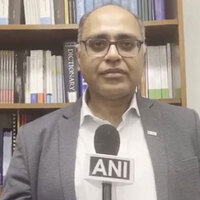
France has built this nuclear energy fortress, according to former geologistJames Cooper, now investment director at Fat Tail Investment Research."Its built a moat within Europe, which is starved of energy."
As France's 56 reactors easily fulfil local demand, it could export excess energy to neighbours such as Germany, where energy costs soared after Berlin began closing down their own reactors and coal plants as a result of policy proposed by the Green Party.
Cooper notes that PPE3 aligns France with other countries that have stuck with nuclear power, including China and the United States, rather than retreating in the wake of scares such as the Fukushima incident of 2011, which spooked Germany as well as Japan.
The long half-life of Frances nuclear tests in Polynesia
Anti-Western backlash
But Frances atomic energy fortress has a vulnerable spot: uranium supply.
For decades, Frances nuclear fuel came mostly from former French colony Niger, where the state-backed companyOrano(formerly Areva) ran operations including the Somar mine, providing roughly 20 percent of Pariss uranium imports over the past decade or around 1,2001,600 tonnes of uranium (tU) annually.
This trade came to an abrupt end when Nigers2023 military coupousted pro-Western President Mohamed Bazoum.
The ruling junta revoked Oranos permits, nationalised Somar in June 2025 amid accusations of unequal profit-sharing and blocked exports, leaving France with stranded assets worth around $210 million and a gaping supply hole.
Cooper sees this as symptomatic of a broader anti-Western backlash in West Africas mineral-rich Sahel region.
Niger is definitely on a nationalistic agenda. Its already taken [Oranos] operations and brought them under state control, he explains.
Neighbouring Malis junta has followed suit, targeting foreign miners. Both now tilt towards Russia and China, who offer engineers, infrastructure and fewer political strings than Western firms.
They probably have business which is not so constrained like in the West, says Cooper.
Niger lacks the expertise to run these technically demanding mines solo, creating a window of opportunity for thoseBRICSnations to get into West Africa, he added.
Paris prosecutor opens investigation into missing uranium in Niger
Scramble for new sources
To plug the gap, Macron is trying to find alternatives. His state visits toKazakhstan, the world's largest producer of uranium, andMongoliademonstrate his determination to do so.
Meanwhile,Frances Orano is working on a potential restart of the Trekkopje uranium mine in Namibia, the worlds third largest producer, and also holds an ownership stake in uranium production at the Cigar Lake mine and the associated McClean Lake mill in Canada.
Orano has also recently established a presence in Australia, focusing on grassroots exploration for in-situ recovery amenable uranium deposits particularly in South Australia.
However, Cooper says there are obstacles in his path. "From a geological perspective, theres a large lag... youre looking at 10 to 15 years before an undeveloped mining project actually enters production.
Uranium mining is notoriously capital-intensive and technically tricky, over and above the challenges of putting permits in place and the construction needed.
And while Kazakhstan dominates global supply at 43 percent, its Soviet-built infrastructure and Chinese stakes in its key projects worry Cooper.
Kazakhstan is probably going to be more aligned with the former Soviet Alliance and also China, he warns. Deepening ties there simply [create] dependence on a system which centres around Russia, he says.
As for Mongolia, Cooper says it is not a known province for uranium mining and that the country is just at exploration stage. "Investment there is a bit of a long shot," he adds.
Namibia, he says, offers a decent middle leve.
Australia's Paladin Energy recently restarted a major mine in the country, but Chinese firms dominate operations, with Orano holding only modest exploration assets.
Cooper urges a pivot to Australia and Canada "Western-aligned countries in order to break the Russia-China grip. Canada has proven reserves in the Athabasca Basin, whileOlympic Dam inSouth Australiacontains 26 per cent of the worlds low cost uranium resources and is the worlds largest uranium deposit.
Belt and Road
Meanwhile, Chinas nuclear surge casts the longest shadow. The country has more than 20 nuclear reactors under construction, and is planning a 50 percent fleet expansion.
Beijing leverages investments from its multi-billion-dollarBelt and RoadInitiative a massive global infrastructure programme launched in 2013 that funds and builds roads, railways, ports, and energy infrastructure across Asia, Africa, and Europe to secure lucrative resource deals and advance infrastructure projects in Kazakhstan, Mongolia and across Africa.
China will probably dominate uranium pricing as it emerges as the worlds largest nuclear power, says Cooper.
If Europe were to follow Frances model whether that took the form of a German U-turn on nuclear policy orbuildouts by the United Kingdom or Italy, overalldemand could hit 87,000 tU by 2030 against todays 60,000 tU mine output, according to the World Nuclear Association'sWorld Nuclear Fuel Report 2025.
The UK nuclear sector currently operates five ageing power stations, producing around 12 percent of its electricity, with life extensions under way and new construction such as Hinkley Point C progressing. Italy, meanwhile, has had no active reactors since 1990 but is planning a revival through advanced technologies and small modular reactors, targeting significant capacity by 2050.
Uranium reserves do exist worldwide, says Cooper, but he added: "It's actually the money, the capital and the time that it takes to get it out of the ground which isgoing to be the difficulty for [any country] looking at restarting their nuclear reactors."
Originally published on RFI