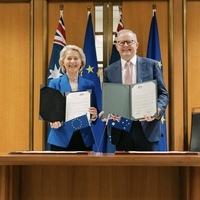


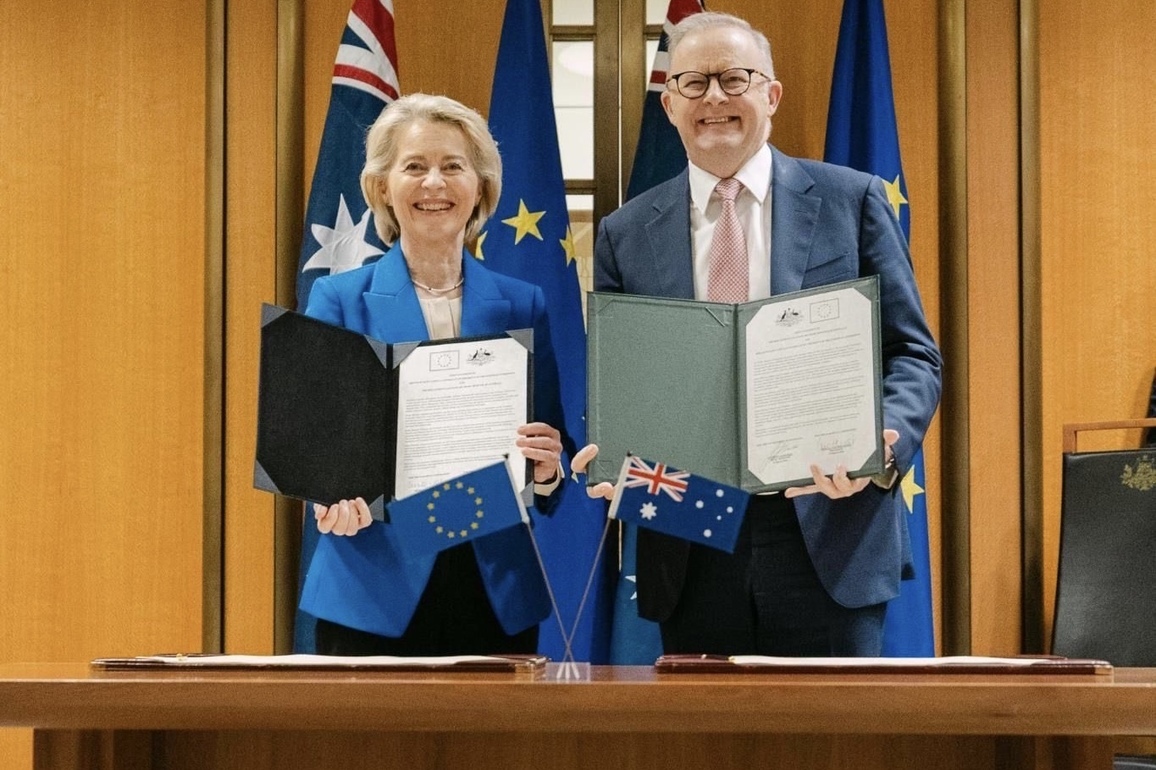
CANBERRA, Australia: Australia and the European Union have finalised a long-awaited trade agreement, lowering tariffs on most goods and strengthening cooperation on critical minerals as both sides seek to reduce reliance on China.
The deal, eight years in the making, removes tariffs on more than 99 percent of EU exports to Australia and nearly all Australian critical minerals entering the European market. It comes amid rising Western concerns over supply chain vulnerabilities and China's dominance in rare earths.
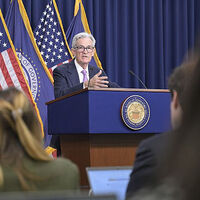
"The EU and Australia may be geographically far apart, but we couldn't be closer in terms of how we see the world," European Commission President Ursula von der Leyen said in a statement.
"With these dynamic new partnerships on security and defence, as well as trade, we are moving even closer together."
Australian Prime Minister Anthony Albanese said the agreement would be worth about A$10 billion annually to the domestic economy. He added that tariff-free access for Australian critical minerals into Europe would help stabilise global supply chains.
"For both Europe and Australia, getting China right is a strategic imperative, and this is why bringing to life our critical minerals partnership will be crucial to our success," von der Leyen told Australia's parliament.
"We cannot be over-dependent on any supplier for such crucial ingredients, and that is precisely why we need each other."
The agreement also reflects Europe's increasing focus on the Indo-Pacific, following recent trade deals with Indonesia and India.
However, the pact has drawn criticism from Australia's agricultural sector. While the EU will remove tariffs on many farm products, key exports such as beef and sheep meat will remain subject to quotas.
For beef, the EU will introduce tariff rate quotas totalling 30,600 metric tons, with about 55 percent of that volume entering duty-free.
"Australian farmers are extremely disappointed that negotiations for a free trade deal with the European Union (EU) have concluded without commercially meaningful agricultural market access gains since Australia last walked away from negotiations," said Hamish McIntyre, president of the National Farmers Federation.
On the European side, tariffs on products such as wine, sparkling wine, fruit, vegetables, and chocolate will be eliminated immediately, while tariffs on cheese will be phased out over three years.
The agreement also includes provisions to protect certain European product names, known as geographical indications, although some Australian producers will be allowed to continue using terms such as feta with clear origin labelling.
Australia has also agreed to raise the luxury car tax threshold for European electric vehicles to A$120,000, meaning about 75 percent of such imports will be exempt from the tax.
Trade ties between the two sides are already significant. EU firms exported 37 billion euros of goods to Australia in 2025 and 28 billion euros of services in 2023.
The EU is Australia's third-largest two-way trading partner and a major source of foreign investment, underscoring the economic importance of the new agreement.