

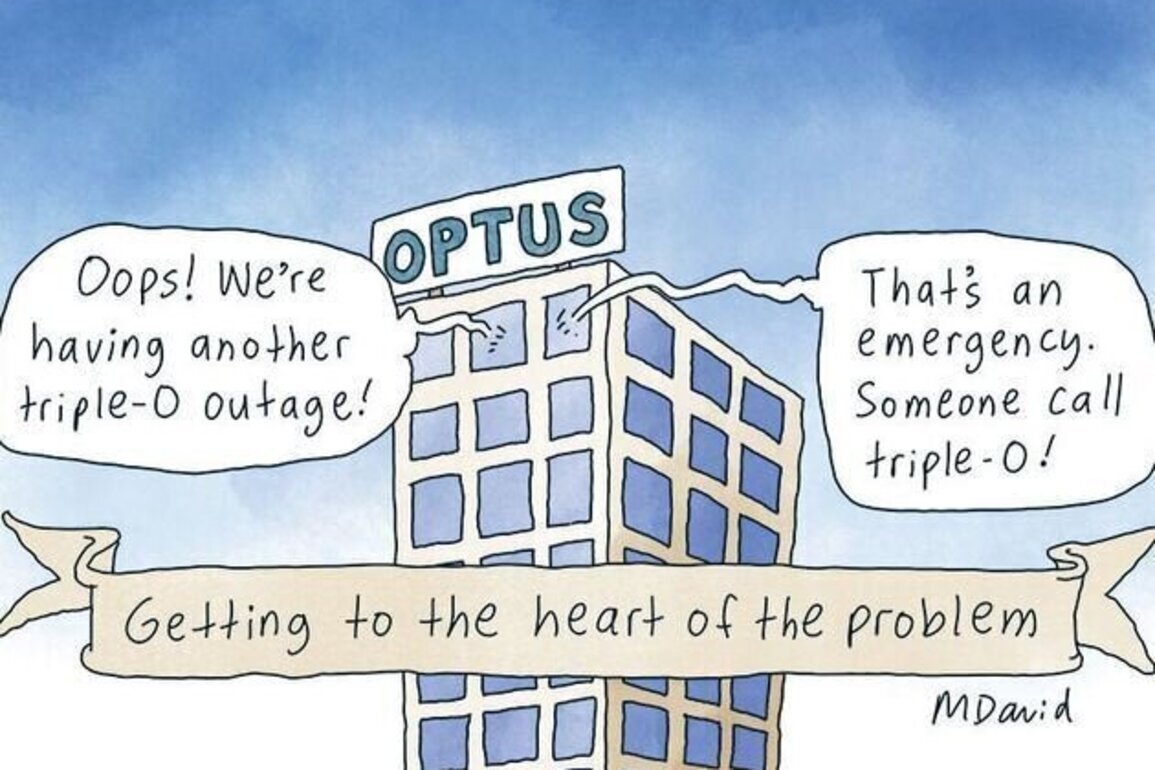
The regulatory andindustry failures behind Australias Triple Zero outages were not only foreseen, they are entirely rectifiable, writesJames Parker.
AUSTRALIA'S telecommunications sector and public confidence in Triple Zero are at a crisis point.
Multiple emergency call failures late last year have shaken public confidence in a service thats used by millions and essential for saving lives.
These failures are a symptom of broader problems in the sector, includinghow emergency calling has been designed and implemented on 4G.
The idea that you can just pick up your phone and reliably access emergency services in Australia is no longerguaranteed, as it had been for decades prior with 2G & 3G.
Australias premature 2024 3G Network shutdown is a key reason as to why. Now a "canary in the coal mine"for Europe and the rest of the world, yet to fully transition.
In fact, Australias 3G shutdown has now gone so badly, with consumers impacted by phone compatibility issues and lives lost, thatEuropeans are now calling for further shutdown delays.
Australia is the blueprint of exactlywhat not to do.
The 18 September 2025 Optus failure
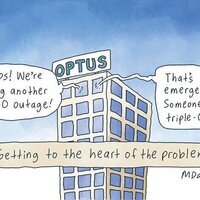
What should have been a routine Optus firewall upgrade, started in the early hours of 18 September 2025, would eventually result in hundreds of failed calls to Triple Zero across several states.
Optus, once again in the spotlight for another failure, this time fatal.
A company surrounded by back-to-back controversies froma 2022data breach, a 2023national outageand in 2025 beingfound to have engaged in unconscionable sales conductin the Federal Court.
Once again hauled before a Senate Inquiry, Optus is adamant they are addressing the issues, with CEOStephen Rueunder pressure to reform a company that cant seem to get the basics right.
Dr Kerry Schott AOs subsequent reportand testimony to theTriple Zero Inquirydescribed the culture of carelessness within Optus. Procedures ignored, processes not followed.
But these issues arent exclusive to Optus, though they are particularly acute.
But when a sector as critical as telecommunications is given "light touch"regulation with minimal oversight by authorities, its no wonder that such failures occur.
Thetelecommunications sector is now thesecond most distrusted in the country, and Optus, Australias most distrusted telco brand.
The "Wentworth Falls Incident"
A week later, on 24 September 2025, there was a failed call to Triple Zero, but this time on the TPG/Vodafone network. A call failure that would later be confirmed to involve a death.
This was technically separate in nature from the week earlier Optus failure, but interconnected to broader failures in the sector, including its regulation.
However, the publicwouldnt find out about this incident, nor the death,until 9 December 2025more than twomonths later when the industry, brought before a Senate Inquiry, would finally make it public.
The industry wasperhaps keen to "get its story straight"prior to the hearing, as commented by Committee ChairSenator Hanson-Young, who described it as a "cover-up".
The cause was not directly a network failure but a device software issue.
The device at the centre of the incident? ASamsung Galaxy J2 Pro. A device that is technically "hardware compatible"but software incompatible.
It was an older 2018 device lacking a critical software update an update is only requiredfor the Vodafone prepaid version of the phone (VAP CSC). It is still able to place normal calls, but without that update installed, this device is unable to call 000 on 4G, butonly on the Vodafone network, which is instead reliant on 3G for 000.
Though "unlocked retail" and other telco variants are entirely unaffected by the issue and do not even need the update.
The warnings this would happen
To most people, the idea a device needs a software update to work for an emergency call is a completely foreign concept.
Such a requirement is entirely unprecedented in decades past with 2G and3G.
However, the Federal Government, regulators and industry wererepeatedly warned that something like thiswould happenpost-shutdown.
Such warnings existeven in theWitness Hansard record from the 2024 3G Shutdown Senate Inquiry, in addition to other correspondence andsubmissionsfrom the public andtechnical experts.
These warnings were not heeded or correctly acted upon.
Changes to the Emergency Call Service Determination
What was the "fix"for this?
A ministerial device blocking instrument wasintroduced mere days before the 3G shutdownto brick all phones the carriers have determined are "incompatible"with Triple Zero on 4G.
Australias 3G shutdown: Why your 4G/5G phone is now blockedThe ill-planned shutdown of Australia's 3G network not only happened with little notice, but has caused a technological nightmare for consumers.
Though arguably justified from a public safety perspective, thedirective was clearly not fit for purposeand plagued with issues of potential conflict of interest and consumer harm, with no recourse for consumers should the carriers get it wrong.
The carriers were ultimately left to be the sole arbiters of what is allowed and what isnt.
These same blocking rules currentlysee many new 4G and5G phones blockedby some or all of the providers, including many phones used by tourists.
The carriers have conflicting ideas about what works.
Blocking of devices
Since the 3G shutdown, the telcos have essentially only blocked based on make and model(theTAC), not per individual device (uniqueIMEI).
This same approach allows "hardware compatible"devices to connect even if the software is unable to call Triple Zero. The telcos do this because its both cheaper and easier to only block based on make and model(TAC), rather than per device.
FOI Documentsshow TPG was aware that the device software of the 84-year-oldSamsung J2 Pro hadnt been updated. Customers were instead subjected to reminders andwarnings to update their software.
The second death
Only after the September 2025 incidents did TPG move to individually (IMEI) block incompatible devices that required a software update.
However, such a move was carried out too late asanother death due to a Samsung device issue would occur on 13 November 2025, once again on theVodafone network.
This second incident wasthe first to be publicly reported, with the original 24 September death still entirely unknown to the public.
Awareness of these incidents was perhaps only brought to public attention as a result of heightened concerns after the Optus failure.
Prior to this,in May 2025, TPG told the regulatorthat blocking individual devices (IMEIs) was "resource intensive"and not operationally feasible. Yet, TPG subsequently did just that after the deaths occurred.
New emergency call reforms dont go far enoughThe Federal Governments new emergency call reforms mark progress, but Australia still lacks a national plan to secure its digital infrastructure.
Invisible emergency call failures
Without 3G networks, attempted 000 calls from "software incompatible"4G devices are now entirely invisible to carriers.
The 3G "Circuit Switched Fallback"calling, which previously provided universal compatibility across devices andnetworks for calls and emergency calls, no longer exists in Australia, andwithout it, there is no safety net to catch 4G (VoLTE) call failures.
This was an entirely foreseeable consequence of the shutdown.
No different to a phone being suddenly out of signal range,emergency calls go nowhere andthe desperate calls for help are now unanswered.
Questions remain as tohow many others have experienced the same issue, withthe world entirely unaware of their trouble or their fate. There is little doubt this likely occurred before September 2025 and probably will again, if it hasnt already.
The industry has no real-time visibility as to whether your phone can actually call Triple Zero, and isinstead broadly over-reliant on "compliance documents", historical call records and crude software version data for device models to determine 4G (VoLTE) compatibility.
More troubling still, many devices that are capable (including on all networks) can sometimes take 6090 seconds to connect, many often looking for 3G, then 2G, then 4G.
An ABC 7.30 report inOctoberalso highlighted some of these issues.This is now the new normal in a "post-3G shutdown"Australia.
The rapid blocking of Samsung devices
Following on from the 24 September incident, Telstra carriedout some testing with a Samsung-supplied Galaxy J2 Pro thoughit appears not enough.
In the following weeks, the telcos rapidly blocked tens of thousands of Samsung devices across many models sold between 2015 and 2021, though not all equally.
Many devices were genuinely impacted (especially when used on Vodafone), but others were entirely unaffected by the issue. This occurred even without the critical updateinstalled.
They were lumped in with the "incompatible" models because its both easier and cheaper to block a device and sell someone a new one rather than properly test anything, let alone roll out an update to fix those with a genuine problem.
Optus also, in their rush to address the issue, incorrectly told thousands of customers with Samsung devices they needed Android 13 or higher, when that was entirely incorrect.
This mistake was only corrected weeks later, on 18 November, likely after it was raised with Optus by government officials acting on consumer complaints.
Those required an update only needed the latest available, as advised by both Telstra and Samsung.
Telstraadvised:'devices that are running the most up-to-date software version available already have the fix installed on their device'.
Vodafone and Optus would also block some brand new 5G devices from other brands in the ensuing weeks, including many "whitelisted"as compatible by Telstra.
In the case of Vodafone, in early December after the Senate hearing, it panic blocked all "unknown" capability devices from their network, including recently purchased 2025-model 5G phones.
Thats on top of the various "non-phone"devices blocked by Optus,such as vehicle asset trackers, smartwatches, and IoT devices.
The same devices not blocked by Telstra.
The failures with Samsung devices
Samsung, also called before the Senate Inquiry, was keen to distance itself from the problem and technical failings with its devices failings now connected to at least two deaths.
It deniedthat a software update could have possibly broken anything, despite someextensive user testingand firmware analysis showing that this was true for many of itsdevices especially Telstra, Optus or retail models originally sold with Android 7 or 8.
Samsungs completely proprietary 4G calling software and network profile system for their devices, different to every other Android brand, was clearly plagued with technical failures and design flaws.
The inconvenient reality for Samsung is that changes in its device software (and specifically for the Australian market) in its (2019) Android 9 software releaseintroduced a new line of code that "refreshes"the emergency settings ("network profile") in use by the device when connecting to a network for Triple Zero.
A change likely introduced to improve the functionality of devices contained a critical flaw if a device lacks settings for all AU networks.
Telstra, Optus and retailsold Samsung devices that worked before on Vodafone for 000 with Android 8 Samsung software,but which were now broken when updated to Android 9. These devices,like the Galaxy J5 Pro, or even Galaxy Note 8, were now unable to call000 on Vodafone with 4G.
The phones are now looking for network settings that dont exist on the device the "forced refresh"clearing any pre-selected settings that would have otherwise worked.
If a device is missingthe Vodafone emergency network settings and the phone is connected to the TPG/Vodafone network, the 000 call will fail. A very obvious flaw, though predominantly an issue for Vodafone customers.
The crucial "fix"for these Samsung devices is a 1.3 Kilobyte Text file in the Firmware, which contains Vodafones 4G 000 network settings. This is afile not consistently rolled out to all devices, despite Samsung being entirely capable of doing so.
The 4G emergency calling function was also only enabled on the Vodafone network in 2021, while Optus and Telstra have supported the function on Samsung devices since at least 2017.
Interestingly,the exact same Samsung devices not running Australian market Firmware are notimpacted by the issue, instead using the 000 network settings of whatever carrier SIM card is installed. These devices are entirely unaffected if used solely with Telstra or Optus SIMs, as opposed to their "in case of no SIMor AU sales code"function for the Australian Market.
Yet many of these devices have been caught up in the blocking, are Samsung calling phones it manufactured itself and sold on "the grey market".
This is despite consumers being previously told their device (including overseas variants) was okay, including prior to the shutdown in 2024, with the Official AMTA 3G ShutdownChecker.
Telstras report on the issue
Compounding this further, Telstrasreporton the problem to the Federal Government and ACMA, in October, is also actuallyincorrectin some of the specifics, including the nature and scale of the problem.
This assertsall pre-November 2021 Samsung models are impacted and, without an update, are unable to call 000 on Vodafone with 4G.
It also states that the forced device behaviour 'ignores/overrides all Carrier and SIM card settings',when that is entirely incorrect and is provably wrong.
A clear sign that Telstra hasnt properly tested the phones, which it sold, including the Galaxy J2 Pro, which doesnt even require the update.
Others sold with Android 7 or 8 are alsonotaffected if they were sold by Telstra or Optus (with those carriers respective software installed), including the S6 and S7,which have now been blocked.
Those devices are entirely capable of calling Triple Zero on Vodafone by using Telstra or Optus emergency profile settings.
As an example, the Galaxy S6 and S7 sold by Telstra are configured to always use the Telstra 4G 000 settings on every network, including Vodafone. The same is true of the XSAretail versions. Nor does it seem theyve tested non-AU models that are explicitly "SlotBasedConfig".
Non-existent transparency
But with all of this, there are no detailed explanations as to why a device is blocked or not. The carriers are not even required to provide proof of incompatibility, let alone any public lists.
The only available public list anddataset available for consumers isnot created by the regulator or industry, but instead by this author, and may be viewedHERE.
Just buy a new one
In our modern culture of device disposability, unrepairability and corporate (andregulatory) indifference, its no wonder the "just buy a new one"mentality has been used as the only solution.
Anything other than that is put in the too-hard-basket including by those that should be on the hook to fix this problem or made to be someone elses problem to solve.
Samsung and the telcos are notlegally required under emergency callingregulationsto recall incompatible devices and supply "like-for-like"free replacements, with any such offer of free devices or discounts solely an act of "goodwill".
The costs for these failings are instead borne by consumersand not the industry that allowed all of this to happen in the first place.
Another round of privatised gains and socialised losses.
Telco awareness of the 4G emergency calling issues
Back in 2022, telecoms policy expertRudolf van der Bergmadea presentation to a European Emergency Calling forum,raising the alarm about the issues with emergency calling on 4G and the safety impacts of 2G/3G shutdowns. He calledon regulators andgovernments to stop the shutdowns until the technical issues were resolved.
Van der Berg said theseissues are "common knowledge"in the industry and that "..there is nobody who feels responsible to fix this".
Tabled Senate Inquiry documentsshow Australian telcos were absolutely aware of device compatibility issues prior to the first 3G shutdown.
The carriers jointly briefed regulator ACMA about the problem of 4G (VoLTE-capable) devices that are unable to call Triple Zero on 4G, on 8 December 2023 sevendays before TPG/Vodafone would start their 3G shutdown.
However, curiously, months earlier in late July/August 2023, Vodafone quietly removed devices from their official VoLTEsupport page, which can make 4G calls on Vodafonebut not to emergency numbers.
Devices removed from Vodafone VoLTE Support Page in 2023
The Samsung devices in yellow were removed and are missing from the update version of the page.pic
The Samsung devices in yellow were removed and are missing from the updated version of thepage.
Many of the same devices are now caught up in the Samsung emergency calling issue and blocking, such as the Galaxy S6 andS7 series, Galaxy J5 Pro and more.
Its a question of how things might be different if more action was taken then, by both the industry and regulators, rather than simply being treated as acorporate and commercial matter.
Where to now?
With aSenate committee currentlyinvestigatingTriple Zero outagesdue to report by 14 April 2026, it remains to be seen what the findings will be.
The committee is perhaps somewhat unaware of the extent of the issues that persist for consumers, though many are detailed within thesubmissions provided to the Inquiry.
Senators are, however, critical about the role of the regulator (the ACMA) in all of this, in addition to the failings from the industry itself. Thats in addition to calls from consumer advocates likeACCANand others that the regulatory framework which oversees these companies needs major reform.
Telecommunicationsarenotcurrently regulated as an essential service.
Regardless of the report findings (including those by the regulator), the Federal Government, ACMA and the newTriple Zero Custodianare ultimately now faced with having to fix a mess in part caused by the failures and decisions made during the 2024 3G shutdown.
These problemswere entirely foreseeable and entirely preventable, and even forewarned.
TheMinisters announcement of a Triple Zero reviewearlier this year is a central element to all of this and is critically needed, thoughwith a reporting date in 2027,it remains to be seen what will be done in the near term.
In the intervening time, thetelcos are proceeding with another round of price increasesto further bolster strong corporate profitsand, in the case of Telstra, tofurther enable itto spend billions buying back its own shares.
Whilst this happens, consumers continue to face a patchwork of inconsistencies about which phones are allowed and which arent, with many perfectly compatible devices still blocked from all services.
At the same time, the public is left with no way to actually confirm if 000 works on their devices despite it being entirely possible to do so and without genuine calls or operators. Such a proposal waseven a recommendation from the Schott Report.
Its important to know these issuesare entirely fixable. They just require real public transparency about whats blocked and why, real enforcement of global technical standards, andtesting and active oversight of the telecommunications sector as a whole. We have none of that currently and it shouldnt requirea consumer class action for this to change.
Fundamentally,public interests need to be prioritised over corporate interests. But for that to happen, there must be a willingness from the government, the communications minister and the regulator to see it through.
Fatal Optus failure sparks fresh demands for telecom reformThe deaths of four Australians during the Optus outage have reignited urgent calls for mandated safeguards in our national telecommunications network.
James Parkerhas a diverse background in I.T. and networking, a jack of all trades in the tech world.