

The controversial effort to revive New Zealands extinct giant moa is moving from theory to technology, but scientists remain divided over whether de-extinction is possible, ethical or even necessary, writesPatrick Drennan.
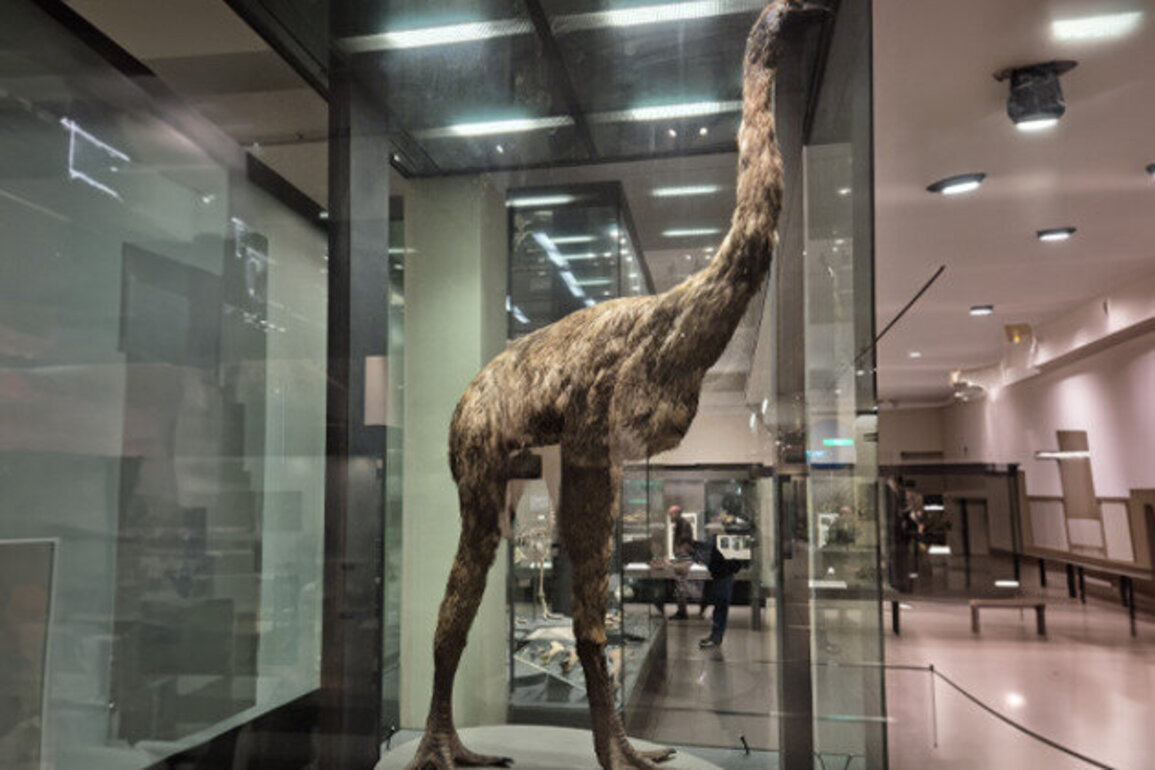
THE LARGEST BIRD that ever existed, theSouth Island giant moa, became extinct about 600 years ago. The first humans who arrived in New Zealand in about 1300 CE, the Polynesian islanders who became known as theMori, devoured the nine species ofmoawithin 200 years of arriving.
On 8 July 2025, American companyColossal Biosciencesannounced a $US50 million (AU$69.7 million) project to revive the flightless bird through gene editing and surrogate hatching. Backers include the MoriNgi Tahutribe and billionaire filmmakerPeter Jackson.
On 19 May 2026, Colossal announced they had created an artificial egg, a 3D-printed lattice structure, to hatch the moa.
The closest living genetic relative to the giant moa is the South American giant tinamou, although the moa is nine times larger. The moas natural egg is about four times the size of a giant tinamou egg 240mm (9.45 inches) in length, compared to 60mm (2.4 inches) in length.
Colossal plans to fertilise the artificial egg by harnessing the genes from moa bones and matching them with the giant tinamou genome. Artificial embryos arenot new, but Colossal says the shell-less incubation platform can carry embryos from early development through to hatching without a biological eggshell or supplemental oxygen. The real issue will be scaling up the process.
Colossal plan: Moa to walk the Earth again by 2033Backed by Peter Jackson and Mori leaders, a U.S. biotech firm plans to revive the colossal South Island moa the largest bird that ever lived within eight years.
Controversy
Several academic critics do not believe Colossal will be able to recreate a real giant moa, but merely a hybrid. While admiring the technology, others, includingsome local Mori, question the ethics of reintroducing a creature to an overall ecosystem that no longer exists.
On the other hand, New Zealand still has rainforests that contain the plants moa consumed, such as fern spores, flax, tree daisies and southern beech.
Colossal spokespersonEmily Lowe Mailaenderadvises me that preliminary work will happen in Dallas, Texas, but as the project progresses, incubation will occur in New Zealand. She is confident that the resulting bird, while not the same, will be as close to an original moa as possible.
However,ProfessorPhilip Seddon,of the University of Otago, told me:
Many scientists are concerned that the findings havenot been published in a peer-reviewed scientific journal.
Nevertheless, geneticist ProfessorMichael Knapp, also of the University of Otago,declared:
When killers become choosers: Resurrecting the Tasmanian tigerEfforts should be made to prevent the extinction of species rather than playing God and trying to bring them back.
Where will the giant moa live?
New Zealand has several large bird sanctuaries surrounded by predator-proof fences. They protect some of the worlds rarest birds, including thekiwi,takah, andkkrikia red-crowned parakeet. In the wild, introduced pests like possums, rats, stoats and feral cats prey on these birds and their eggs, or eat the plants and seeds these creatures need to survive. The existing deep-dug sanctuary fences are not likely to constrain a giant moa.
Colossal claims that their artificial egg membrane is groundbreaking and may be used for many living birds on the edge of extinction. It confronts the problem for modern conservationists of the limited gene pool of these rare birds. This technology could be very helpful for low-breeding species such askkpthe worlds largest parrot.
Still, Professor Seddon contends that averting extinction might be a better application of so-called de-extinction science than trying to recreate long-lost species.
In atelevision interview,Paul Scofieldof Canterbury Museum, a partner of the Colossal project, described the giant moa being kept in aJurassic Park-style enclosure that people will pay to view. It doesnt sound like it has much to do with science or conservation, but it certainly stirs the imagination.
Patrick Drennanis a journalist based in New Zealand, with a degree in American history and economics.
Related Articles
- Colossal plan: Moa to walk the Earth again by 2033