

The latest U.S. Government shutdown underscores how calls for small government are less about saving money and more about consolidating power, writesDavid Joy.
HERE WE GO AGAIN. Another U.S. governmentshutdown. Notice that the U.S. government never shuts down because it doesnt have enough dollars only because it cant agree on how to spend them.
The U.S.Government, as a currency issuer (like the Australian Government), is not financially constrained. Every dollar the Government spends is abrand-new dollar. The reason the Government is in shutdown is simply because lawmakers cannot agree on what to issue those new dollars in return for.
There is no shortage of dollars. When the umpires are unsure if a defender got a touch on a football before it crosses the goal line, there is no shortage of points, but the outcome may be an award of six points or an award of one point. Currently, in the U.S., we have two umpires (Republicans and Democrats) who are unable to agree on how many points (dollars) should be awarded and to whom.
Trump, Hitler and acquiescing to murderous regimesManaging editor Michelle Pini discusses Donald Trump's burgeoning dictatorship and what Australia's response might mean for the future of democracy.
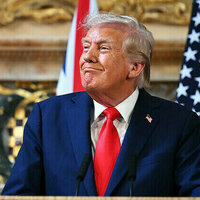
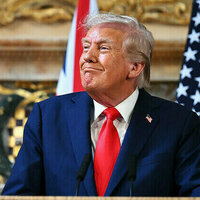
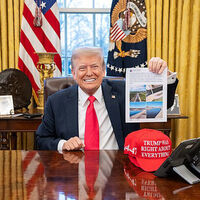
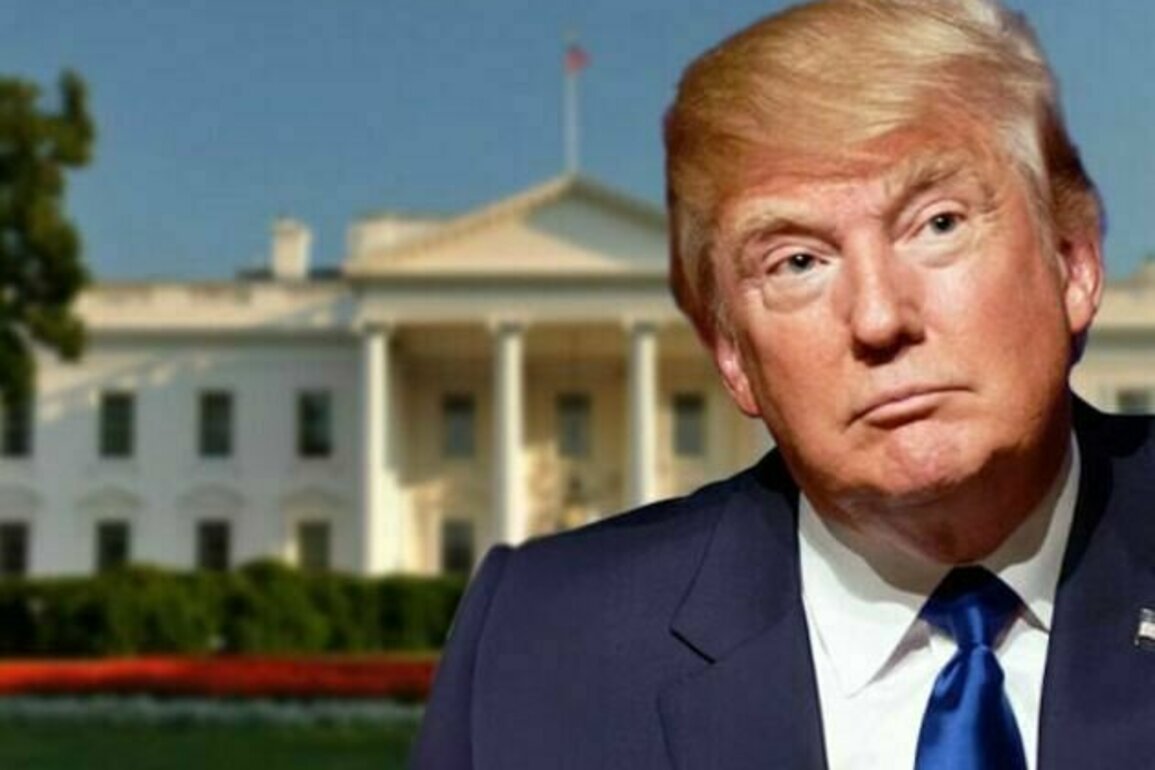
Somecommentatorsare pointing out that theTrumpAdministration has gone out of its way to cultivate the shutdown since it presents an opportunity to shrink the size of the Government.
But what do we mean by small government? Most economists would measure the size of government according to the size of government spending as a proportion of GDP. During the late 19th and early 20th Century, this number was around 1-2% in both the U.S. and Australia, but now it isaround 37%in these countries, including government transfer payments.
Does this really mean that government has about 37 times more influence over the economy now than 125 years ago?
The short answer is no. During theGilded Agein the U.S. in the second half of the 19th Century, the titans of industry (the robber barons such asCarnegieandRockefeller) were well-connected with government, to put it politely.
Todays robber barons, such asMusk,BezosandZuckerberg, are equally familiar with thecorridorsof political power. InThe Great Transformation,Polanyiexploded the myth thatcapitalismcan persist without significant government involvement. When right-wing politicians call for small government, what they really mean is for government to promote the interests of the 1% at the expense of the rest.
It is not hard to see the hypocrisy from the irony of the U.S.Government needing tobail outthe chainsaw-wielding PresidentJavier Milei,to thedisturbing expansionof U.S. law enforcement via Immigration and Customs Enforcement (I.C.E.) in the so-called land of the free.
But back to the economics. In the Gilded Age, when government spending (as a percentage of GDP) was relatively low,inequalitywas sky-high.After bottoming out in the 1970s in the wake of post-warKeynesianpolicies, inequality in much of the Western world has climbed back to early 20th-century levels.
Australians much safer than Americans in an increasingly dangerous worldAfter decades of steady decline, violent crime worldwide is escalating.
Whilst the drivers of inequality are varied and complex, a key element is the extent and particularly the breadth of government spending. As the currency issuer, the government always decides who holds its currency. A small government (as conventionally defined) still decides who the recipients of its monetary creation are.
In a simplified example, imagine the only government spending is $100, perhaps on the essential arms industry payments toPalantir, for example.
Palantir and their ilk (or more precisely the company executives) then get to decide how to spend that $100 in other words, how to distribute it. Perhaps seven employees receive $10 each, leaving $30 left over as profit, $10 of which is paid as dividends to shareholders. These employees and shareholders then spend (most of) this $80 (say, 80% of it) on goods and services, the providers of which also spend 80% of what they receive on other goods and services and so on.
Via theexpenditure multiplier, this makes total GDP equal to $500, with government expenditure representing the original $100, or 20%. Who decides upon the distribution of dollars (and hence resources) in this relatively (so-called) small government economy? Whomever the government pays, in this example, members of the military-industrial complex, including Palantir executives and shareholders.
Some modern monetary theory (MMT) economists refer to this as thecurrency filterthe government always decides the initial distribution of currency (who it delegates the decision to thereafter). Trump would rather delegate that decision to himself, his family and a small bunch of (br)oligarchs. Others would prefer that these decisions be delegated to a wide range of people, likely making for lower inequality.
As he left office in 1961, PresidentEisenhowerwarned about thegrowing powerof the military-industrial complex. The domination of this elite has never been greater, but also never more transparent. Trumps decision to rename the Department of Defence to theWar Departmenthelps to demonstrate clearly what the activities and goals of the elite that run the U.S. really are. They are simply bullies, looking to wield power and crush resistance both inside and outside the U.S.
The hypocrisy of the small government claim is also laid bare by the increasingly centralised and dictatorial nature of the Trump Administration. Indeed, even the manufactured government shutdown itself is a ruthless exercise of government power. There is no choice between big and small government. There is only a choice between good and bad government.
Anyone in Australia attracted by the rise ofTrump-lite politicianson the Right should take heed.
David Joyteaches the Foundations of Modern Money, Institutions and Markets subject at Torrens University, is a learning facilitator at Chartered Accountants Australia and New Zealand (CAANZ) and lectures in accounting at theUniversity of Adelaide.