

What has changed after the Bondi terrorist attack on Sunday 14 December?
DrLee Duffieldwatched the events unfold and penned this report on how Australians received the bad news over the first hours.
LOOKING AT THE TRAGEDY through the barrage of mainstream media and first responders' activity, on that night, it demonstrated national determination to protect victims this time the Jewish community targeted at an outdoor celebration forHanukkah.
That might not be enough from the point of view of Jewish people afraid that the Middle East conflict has come to Australia and they will be attacked many times over.
A wave of antisemitism?
The notion of a wave of antisemitism sweeping the country was immediately qualified by leaders, beginning with the Prime Minister,Anthony Albanese, whotoldJewish Australians, we are with you.
An attack on Jewish Australians is an attack on all Australians, Albanesesaid.
Weaponising outrage: The hidden hands behind Australia's antisemitic attacksAs fabricated terror plots unravel, questions mount about whos truly behind Australias wave of antisemitic attacks and why.
Yet, the invasion of Bondi, where there is a strong Jewish community, had been well foreshadowed. There is anti-Jewish graffiti around the streets often enough. During past times of tension, it has seen convoys of cars menacingly patrolling the neighbouring suburbs, having to be chased away by the police.
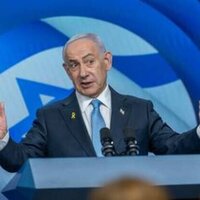
Any wave comes from Islamist groups, or individuals, in other parts of the city, at this time focused on the bombardments of Gaza by Israel. The objectors will be identified with the victims in Palestine, in cases likely to have friendship and family ties with them. They will see the perpetrators as not only the radical-nationalist government ofBenjamin Netanyahuand his armed forces, nor the state of Israel, but as Jews.
The terrorist idea is to match grievance with grievance, and force the recognition of their view, without being able to see how that will be rubbed out by the cruelty and injustice of their actions.
There has been enough activity on the part of extremist right-wing gangs for people to have asked, after the shots were fired, whether an antisemitic fringe of Skippy-kangaroo Australians had to be considered also but not this time.
Beyond that, Australia has followed a tradition of religious toleration; it is a place of trust more than hatreds or waves of antisemitism. There has been demonstrated horror at both the attacks on Israeli citizens on7 October 2023and the mass killing and systematic immiseration of people of Gaza by the Israelis. The Federal Government gained support and weathered criticism for its recognition of Palestine and imposition of sanctions against extremist individuals on the Israeli side.
Certain Jewish organisations in Australia have been aggressive in lining up with the present Israeli regime, but have certainly not engaged in violent actions in Australia, which is the issue at this time.
What is to follow?
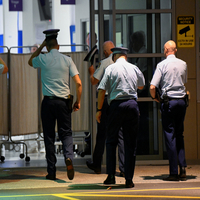
Pressure on the Government now will focus on what can be done for the protection of Jews in Australia. Official reviews of the attack at Bondi, bound to happen, with a coroner already in place, and the Police Commissioner promising inquiries, may generate change.
Questions will be: How much liaison occurred between the police and the organisers of the Hanukkah event? How could two attackers with long firearms get onto the bridge to fire down on a crowd? Did the police there have access to suitable weapons to engage them? Essentially, necessarily, regrettably, the conclusion may be to routinise more surveillance and setting up of security cordons and that still does not mean that new protective and pre-emptive measures will remove the threat.
The head of the security service,ASIO,Mike Burgess, conceded at the national media conference that one of the gunmen was known to police, as one of many, but his previous activities had not been enough to set off an alarm. That is very often the case with terrorists who suddenly strike; although part of the pressure on the Government now, hard to resist, will be for more action on the immigration side, to keep them out.
Antisemitic bomb threat was a hoax the political overreaction was realA string of antisemitic hoaxes was exploited by both major parties; neither deserves to be in power next political term.
Getting the news from Bondi
How was the attack on Bondi, a place at the heart of Australia, if ever there was one, experienced by Australians?
The mobilisation of the broadcast channels, especially the four television networks, provided the essentials of what was needed in a time of crisis for the country. Starting with the ABC, followed by Ten and Nine, then Seven, they each opened a channel for continuous coverage and had it going within 40 minutes of the shooting. They provided facts, both to tell and show what happened with the shooting, and additional, important information came to hand; there was eyewitness material, and in the coming hours, the first commentary.
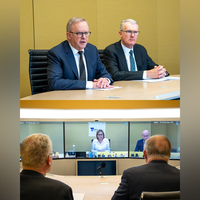
The process was to amass video from the period of crisis, for replay, and set up anchor persons in studios coordinating sources, especially from field reporters (with the ABC deploying several, including some staking out hospitals), and from the media conferences by the New South Wales Government and the Prime Ministers National Security Committee in Canberra.
It was possible in a few hours to learn:
- that 40 people had been shot by black-clad gunmen at Bondi in an attack on an important end-of-year Jewish community festival, Hannukah;
- it was declared a terrorist act by the police, which gave them emergency powers;
- twelve were dead, including one of the gunmen, and 29 injured, including two police officers and at least one child;
- a second gunman was in custody, possibly seriously injured; and
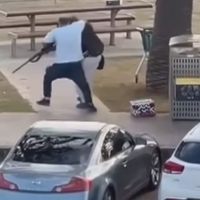
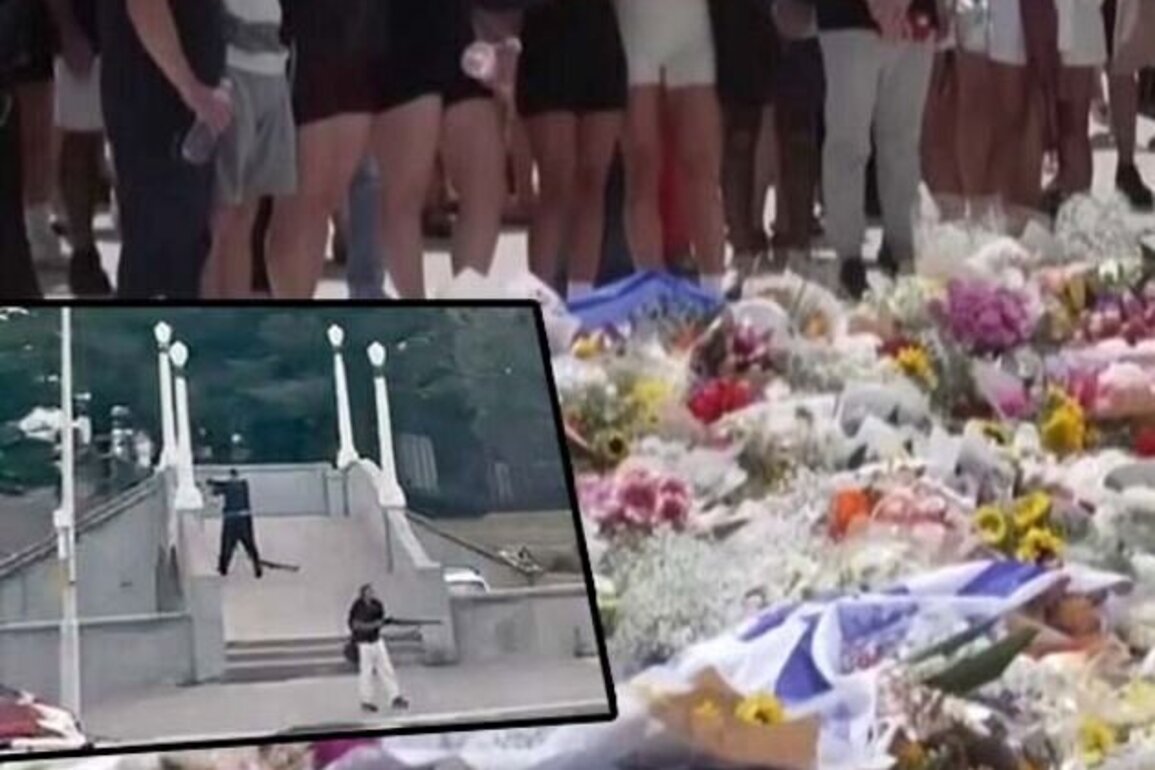
- the sequence of events, from 6:47 PM, lasting maybe ten minutes, was pieced together and shown, including dramatic footage that will roll on for decades of an unarmed man catching one of the terrorists from behind and disarming him, while an accomplice kept firing.
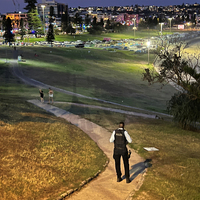
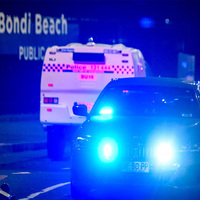
Police engaged the shooters; more arrived in force, along with a fleet of ambulances, beginning a systematic operation where protective control zones were set up and bewildered crowds allowed to steadily move out of the area. Many had to leave behind their cars and belongings on the beach, and the police announced they had found explosives in a parked car, calling in a bomb disposal unit in armoured vehicles.
They also announced they were looking for a possible third gunman, working through the parkland and checking all the cars. And then a law enforcement source told the ABC one of the offenders was named Naveed Akram, whose home at Bonyrigg in Sydneys South-west was already being raided.
Weaponising antisemitismA campaign by right-wing Liberals to link Muslims with fascismand anti-genocide demonstrations to antisemitism is on shaky ground.
Facts, eyewitness, commentaries
The story was filled out by eyewitnesses. An old lady told how her husband had been killed at her side and she was trying to find out where he had been taken; a young man had gone to the famous beach on his third day in Australia and saw two men shooting; a teenager said she and a friend had hesitated before running because they thought the loud noise must have been exciting fireworks.
In commentaries, late in the evening, Governor GeneralSamantha Mostynand Opposition leaderSussan Leycontributed to the messages of reassurance and unity (at least, in the case of Ley, until the next day, when criticism began that the Government had been slow to act on warnings). Overnight, two right-wing Israeli politicians claimed to know Australia was in the grip of the wave of antisemitism. Jewish religious leaders said they had received support from throughout the faith community, including Christian and Islamic leadership.
Observations
The timely deployment of large numbers of first responders and the openness and accessibility of government leaders, security and police, was the mark of an advanced country and highly organised, well-resourced, on-call professional media was crucial to it. This has been named by one commentator (actually the present writer), as a plenary function of the main media, to bring everything together, for everybody, in one place, so that people can get key information they need, from trustworthy sources.
At Bondi, it was crucial to public safety as well. Professional journalists have been slandered by long tradition, but identifiably serious and accountable news services have this key role, important especially in democratic politics. The main media conferences went live to air during the Sunday night for all to see and use, while distribution through the main news channels made it practicable, and the use of a relatively small pack of backgrounded reporters who knew the questions to ask helped to keep it focused.
What about social media?
At Bondi, social media was important in two outstanding instances. From the hundreds of phone cameras there, images of the dreadful event were picked up everywhere, including by the mainstream channels, which acknowledged their value. A few, one used by Channel 9, looked very close, giving a good look at the gunmen.
Everyone, being human and curious, wanted to know who was doing it. Was it Islamist terrorists, especially as it was being realised that the main targets were Jewish? The sight of two of them ruled out a lunatic, even eerily reminiscent of the terrible realisation, in September 2001, when a second plane hit the World Trade Centre, that it was not an accident. A zoomed-in image of one of the gunmen, very clear, appeared to confirm it. The picture was out and featured on at least one of the television channels, a little while before the naming of Naveed Akram.
Beyond that, social media users have attested that they obtained credible material in a short time frame, especially from outlets they were already following and knew where to look. It is possible to imagine a growing overlap between ethical practitioners in both social media and the mainstream, in the zone of well-tested journalistic protocols, like establishing facts and always making honest attempts at disinterested fairness.
An arresting picture, if arbitrarily posted without context, can be watchable, good to gape at for its own sake, but would only beg questions: where and who is it, why, what happened as a consequence? For all that, keep knowing where to look, keep watching the news.
Amongst DrLee Duffields vast journalistic experience, he has served as ABC's European correspondent. He is also an esteemed academic and member of the editorial advisory board of Pacific Journalism Review, and an elected member of the University of Queensland Senate.