

Why were the Liberals in South Australia so thoroughly demolished by Labor and also One Nation? Dr Victoria Fielding argues a seismic, generational shift is underway.
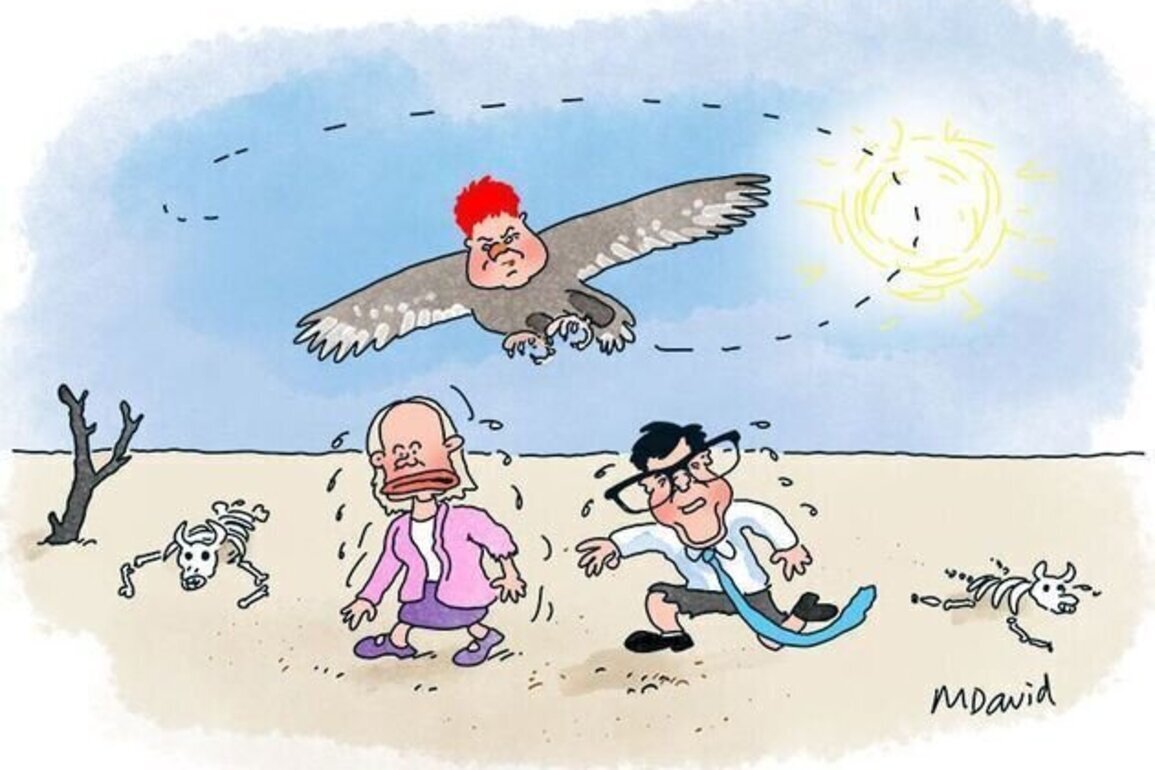
ATTIMEof publication, the Liberal Party haswon five seats in theSouth Australian electionout of 47.Labor, in a landslide,have won 34.. PHON has three and is likely to end up with four, being 77 votes ahead of the Liberals in the last seat in doubt, Nurugga, as the final votes are being counted. So, why were the Liberals, thepartyin power at the previous election just four years ago,so thoroughly demolished not just by Labor, but also One Nation?
This election result shows there has been a seismic shift in South Australian politics, reflective of generational change occurring across the country.
Many commentators misdiagnose this shift as reflecting a dissatisfaction with the major parties, or as many people now like to say: the uniparty. The accusation goes that the majors are inherently bad, the two-party system does not serve peoples interests, and ultimately Labor and the Liberals are just the same.
This uniparty accusation is directed at Labor from the left (The Greens), the centre (Teals and other centre-right independents), and the right (One Nation). Although they all have their own versions, they share the motive of directing any dissatisfaction voters feel towards the Liberals, towards Labor.
However, the theory of mass dissatisfaction with both the majors doesnt cohere to reality. As Antony Green noted, South Australian Labors primary vote of 37.7% is down 2.3% compared to 2022, and 7.5% below the 45.2% Labor received in 2006. Yet, in 2026, many ballots had over ten candidates what with the explosion of minor parties and independents. If there was a major left-wing protest vote amongst progressive voters, the Greens would be the beneficiary. Yet, the Greens only received a 1% increase in their vote.
The result was therefore not a backlash against some theoretical uniparty, but rather was about the Liberal Party. And the mess the Liberals are in has nothing to do with bad messaging, a lack of policies, or four leadership changes in four years. It is much more serious than thatbecause it is structural.
Australia's volunteer crisis threatens frontline climate actionNew research into environmental volunteers reveals a concerning pattern: younger volunteers grapple with hopelessness as Australia's volunteer rates decline, meaning fewer people are stepping up when we need them most.
What the uniparty mischaracterisation and the Labor and Liberals are just the same accusation hides is that despite much change in Australian politics, one thing that has never changed is the two major parties are not the same because they have opposing ideologies.
These opposing ideologies are the foundations through which Labor and Liberals do politics, develop policiesand ultimately govern. As the political arm of the labour movement, Labor exists to further equality of opportunity, wealth and social outcomes. The Liberal Party on the other hand, as the political arm of corporate interests, opposes equality, and rather promotes inequality of wealth. Some more extreme hard-right Liberals also promote social inequality, including gender, cultural and religious inequality, although this is mostly aimed at creating division to win power and then rule for the economic interests of the elite.
These are not small differences between the major parties, they are fundamental.
So, what has happened in this seismic shift? The Liberal Party has traditionally won power through two core strategies. First, they claimed they were better economic managers and stronger on national security. Second, they also ran rabid fear campaigns against Labor reforms, underpinned by the idea that Labor was bad for the economy, and only the Liberals could protect jobs and economic growth.
This strategy worked well for the Liberals up until the point when they got found out. For a whole range of reasons including the Global Financial Crisis and the Labor governments superior management of it;the Occupy Movement;the opening up of the information environment, to give voice to people beyond the mainstream media who fought the hegemony of neoliberal assumptions like the false concept that wealth trickles down people have started to wake up to the reality that the Liberal Party does not represent their interests, but indeed only represents the interests of the mega-rich.
At the 2025 election, for the first time ever, Labor were perceived by a majority of voters asbetter economic managers than the Liberals. This wasnt just a big moment for Australias major parties. It marked the death of the idea that those ruling for the richare making everyone else better off. It heralded a mass-understanding that policies aimed at equality healthcare and disability funding, access to education, workers rights, rights for women, environmental protection, infrastructure spending reforms once seen as wasteful budget items (remember Abbotts debt and deficit disaster), actually make us all better off.
These problems are not justcracks in the Liberal faade. This awakening that equality is good for the economy was a death knell for the Liberal Party. All it left them with was strategy number two; scare campaigns. Having had decades of experience in running fear campaigns often premised on disinformation and misrepresentation the Liberals ran the mother of all scare campaigns, the "No" campaign against the Indigenous Voice to Parliament.
The success of the "No"campaign emboldened the Liberals hard right faction who believed this was how they would win government. But what they misunderstood was that this campaign didnt draw voters towards the Liberal Party. All they did was embolden and promote social inequality through the normalisation of hatred, division, racism and disinformation. This didnt win the Liberals any elections because people still recognised that even if the Liberals serve their social inequality interests, they do not serve their economic interests.
The "No" campaigns normalisation of hate as a political strategy, however, did present One Nation as a valid alternative to the Liberals for right wing voters motivated by a desire for social inequality.
Bot swarms celebrate as South Australia confirms it's 20% racistPauline Hansons One Nation (PHON) has reaped just over 20 per centof the vote in Saturdays South Australian State Election, proving racism is alive and well in the State.
Now we finally get to the result of the SA election. Labor, led by a popular premier Peter Malinauskas, held their share of metropolitan Adelaide votes steady,receiving 45.2% of first preferences. Liberals only won 16.2%.
The 18.2% swing against the Liberals in metropolitan Adelaide went almost entirely to One Nation, who received 18.4% of the metro vote. In regional areas, the Liberals had a swing against them of 13.8%, Labor lost 3.3%and One Nation gained 21.5%. All four seats One Nation looks set to win are in outer regional South Australia.
When voters flocked away from the Liberal Party understanding that the Liberals did not serve their interests many, particularly in inner-metropolitan Adelaide, came to Labor. These voters ideologically align with Labor because they recognise that equality, tolerance, respect and inclusion, including for multicultural communities, is good for a society.
Ex-Liberal voters, however, who have no interest in equality went to One Nation. These voters did not go to Labor because they hate Labor. They hate Labor because Labor promotes equality, tolerance, diversity and inclusion, which offends their desire for social inequality.
Ex-Liberal-now-One Nation voters are hellbent on using their vote to promote inequalityparticularly inequality for non-white Australiansand are embracing One Nations demonisation of immigrants. This explains the one in four South Australians who voted One Nation. They are suffering from economic inequality, which grows their desire to feel privileged socially, particularly based on race.
One Nation, of course, do not serve the economic interests of working people. As a goodfriend of billionaire Gina Rinehart, it is hardly surprising that Pauline Hanson has said she wants towork with the Liberals and Nationals to oppose Labor. Thats the whole point of One Nation.
One may wonder: will One Nation voters ever wake up to that?