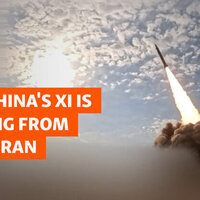


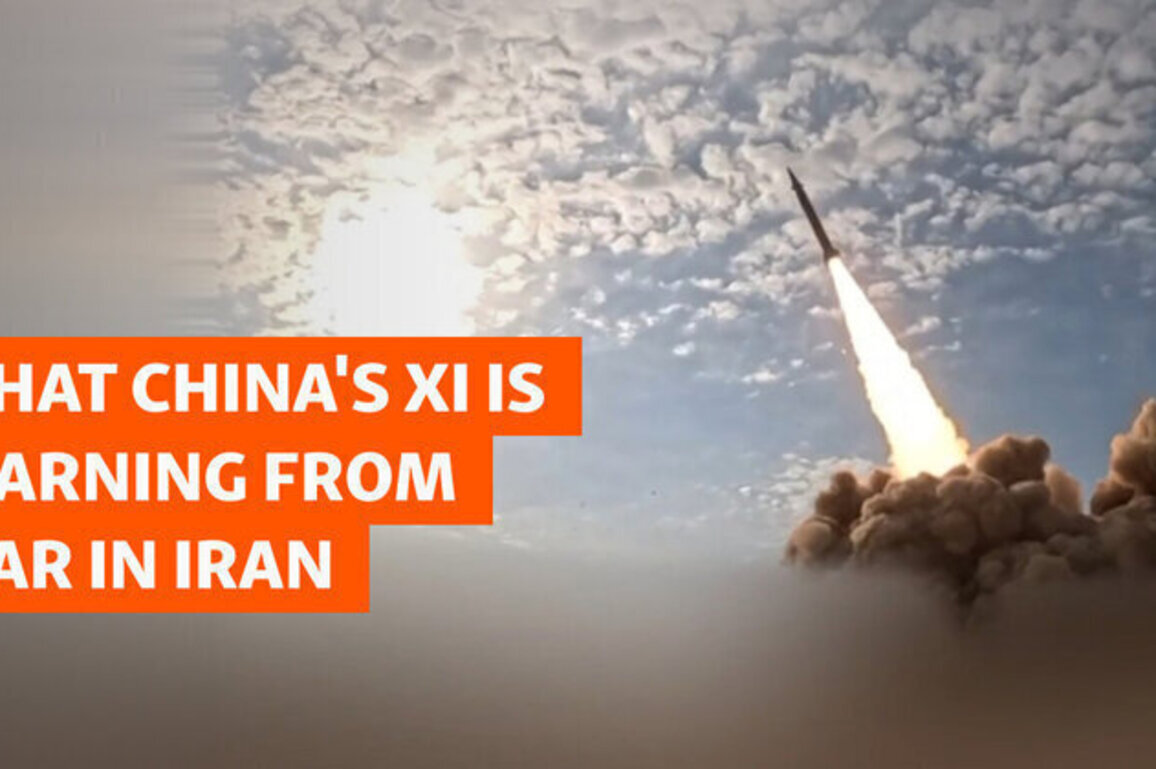
The war in Iran is giving Beijing a real-time window into how the United States wages modern war.
The war has shown the reach of US military power while also raising questions about Washington's ability to manage multiple crises at once. For Beijing, that combination could influence how it assesses risk, timing, and opportunity in any future confrontation with the United States and any kind of future scenario toward Taiwan, a self-governing island of 23 million that China claims as its own.
To better understand what China may be learning from Iran, RFE/RL spoke with Mick Ryan, a retired Australian major general and military strategist who is now a senior fellow at the Lowly Institute, an Australian think tank.
RFE/RL:What is the biggest lesson that Chinese President Xi Jinping has learned so far from the war in Iran since it started in late February?
Mick Ryan:There are many lessons, but the biggest one that Xi has probably learned is that the US military is still a very powerful organization. It can deploy overwhelming force and conduct sustained precision operations, at least from the air and from the sea for some time. That will be very important for him and the People's Liberation Army (PLA) to understand if they're ever going to undertake some kind of blockade or invasion of Taiwan.
SEE ALSO:
Iran War Will Reshape Dynamics Ahead Of Trump-Xi Summit, Says Former US Official
RFE/RL:War is part of a wider environment, so if we're speaking about lessons Xi might be drawing from the war in Iran, how should this one about US military power be seen in the wider context?
Ryan:Notwithstanding the US military's very powerful capability, it's being used by an administration that really is only able to fight one more at a time.
I think the attention span of the administration only allows it to do that, but it's stripped out many of the normal decision support mechanisms that would come through the National Security Council. These decisions look to be being made much more on impulse, and as we've seen from the meandering set of different strategic objectives from this war, it's an administration that is OK with launching something like this without necessarily knowing what it wants from this kind of large-scale conflict.
RFE/RL:How might that then apply toward something like Taiwan? How might that inform their preparations, or what they're going to be doing next in the coming years?
Ryan:I think this shows the Chinese that if they have a better strategy in place, they do have an improved chance of success. Being good at military operations is important. If you can't win battles, then you can't win wars. But strategy is even more important, and having the right strategic assumptions and the right strategic decision mechanisms for executing that strategy is something the Chinese might think that they're better at than the United States at the moment. A strategy gap when you're planning for a war and executing a war can be a real advantage.