

Australias economic reality is anchored in Asia, but its strategic imagination is not keeping pace, writesMainul Haque.
AUSTRALIA IS DEEPLY INTEGRATED into Asia in every practical sense that matters. We trade there, we depend on it for growth, and increasingly our prosperity is shaped by it. Yet much of our strategic thinking continues to treat this reality as secondary.
This is the central contradiction in Australian policy today: our economic future is anchored in Asia, while elements of our strategic posture continue to assume a different centre of gravity.
That gap between economic reality and strategic imagination is no longer abstract. It is visible in trade dependence, supply chain exposure, energy vulnerability and the lived experience of recent global shocks, including COVID-19.
Few leaders understood this more clearly thanPaul Keating. His push to embed Australia within Asia was not symbolic. It reflected a strategic reading of geography, economics and long-term national interest. Through initiatives such as the Asia Pacific Economic Cooperation (APEC), he sought to align Australia with the region that would define its future.
APEC 1993, Tillicum Village Lodge, Blake Island, Seattle, Washington, USA. (NARA: William J. Clinton Library | Wikimedia Commons)
That future is now our present.
Australia is a middle power whose prosperity is structurally tied to Asia.
China is Australias largest export destination, and nine of our top ten export markets are in Asia, including Japan, South Korea, India and the economies of the Association of Southeast Asian Nations (ASEAN).
The United States is the only non-Asian country in that group, ranked third. These are not peripheral relationships. They sit at the core of our export economy and national income, with minerals, energy, agriculture and education deeply embedded in Asian demand and supply chains.
Farmers are anxious, but still in a pretty good paddockWhile Australian primary producers are understandably uneasy over wars and tariffs, they are currently enjoying exceptional prosperity.
Around 70 per cent of Australias exports are directed to Asia, and the region accounts for the majority of Australias trade surplus. China alone typically represents close to one-third of Australias total exports, underscoring the depth of economic integration.
In economic terms, Australia is already part of Asia.
This economic reality is reinforced socially. Modern Australia is one of the most successful multicultural societies in the world, with around 30 per cent of the population born overseas and a significant and growing share with origins in Asia. More than one in tenAustralians has Asian ancestry, and Asian languages such as Mandarin, Hindi and Vietnamese are among the fastest growing in the country.
These communities bring language, cultural understanding and direct regional connections that strengthen trade, diplomacy and economic opportunity. This is not just a social achievement. It is a strategic asset.
Yet this deep integration sits alongside a strategic posture that is often shaped elsewhere.
Since the era ofJohn Howard, Australia has increasingly anchored its security architecture in traditional Western alliances. This trajectory has culminated in commitments such as the $500 billion dollarsAUKUSagreement, including plans for significant long-term investment in nuclear-powered submarine capability sourced from the United States and the United Kingdom.
These capabilities will take decades to fully materialise. By then, the strategic and technological environment may have shifted significantly. This raises an important policy question: whether the scale and structure of long-term defence investment align with Australias most immediate and practical national priorities.
The Australia-Indonesia green economic opportunityA developing opportunity between Australia and Indonesia could underpin a green powerhouse partnership in a net-zero world.
Australia is simultaneously facing significant domestic pressures.
Our health system is under strain, housing affordability has reached crisis levels, and the cost of living pressures continue to rise. Homelessness is increasing in major cities, and higher education debt continues to weigh on younger Australians building financial security.
Our aged care system is also under pressure, with more than3,000 older Australians occupying hospital bedsdue to a lack of appropriate aged care placements. This contributes to hospital congestion and reflects broader structural strain across health and social care systems (we need analternative age care modelthat I have written about earlier).
Energy security further highlights Australias vulnerability. Despite being a major exporter of raw energy resources, we lack sufficient domestic refining capacity and remain heavily dependent on imported refined fuel. We export raw materials and import processed energy at higher cost, leaving the economy exposed to global price volatility.
Recent reporting has highlighted that rising diesel and fuel costs are already flowing through totransport operators and tourism businesses, with surchargesand service adjustments affecting the real economy. This is not an abstract risk. It is already shaping prices, services and household costs.
This is not occurring in isolation. It reflects structural reliance on regional supply chains across Asia. Recent energy challenges have further demonstrated that Australias economic resilience and energy security are increasingly shaped by Asia, where key supply chains and regional partnerships play a central role.
In response, Australias Foreign Minister, SenatorPenny Wong,hasprioritised strengthening relationshipswith key regional economies, including China, Japan and South Korea alongside broader engagement in Southeast Asia recognising their central role in energy security and trade stability.
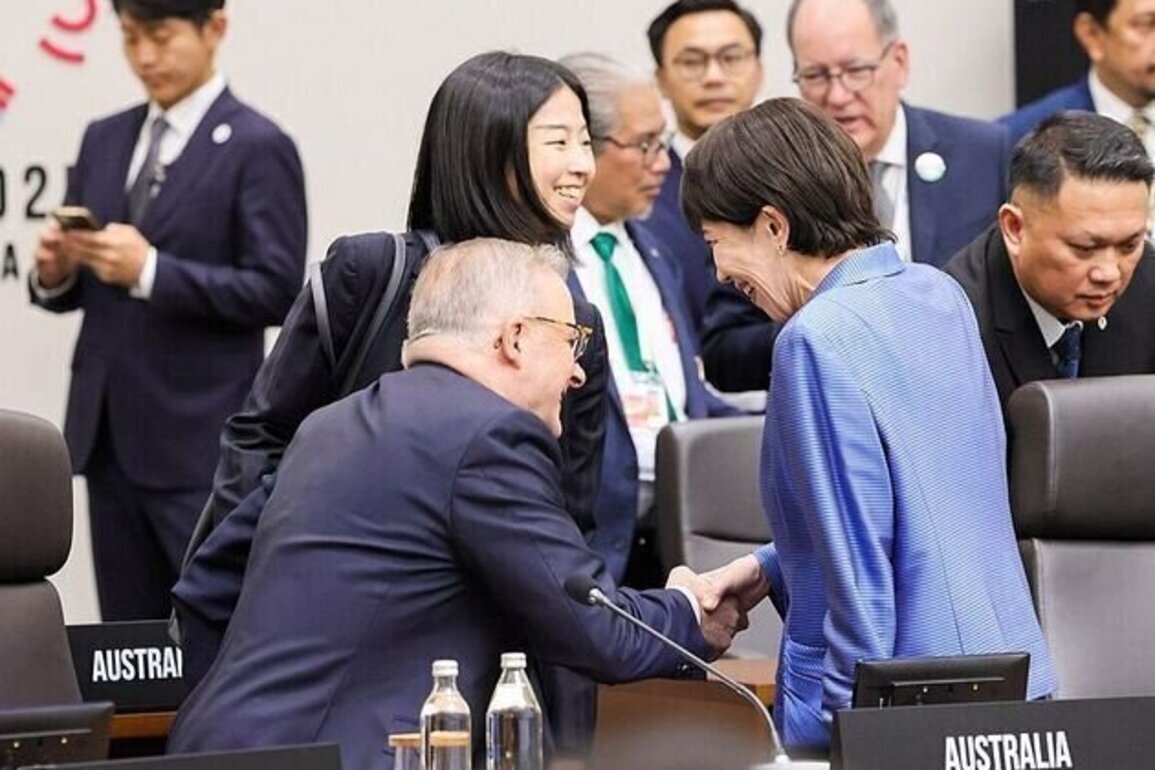
In parallel, Prime MinisterAnthony Albanesehasengaged directlywith regional partners, including Malaysia, Singapore and Brunei, to reinforce supply chains for fuel, fertiliser and broader economic stability.These engagements reflect a practical reality: Australias resilience is increasingly dependent on its region.
Silk Silver Opium: The trade with China that changed historyHistorian Michael Pembroke has offered valuable insight into how China has developed into the country we know today, both economically and psychologically, saysAnne Leyton-Bennett.
This was made even clearer during COVID-19, when global systems were disruptedand Australias economy was immediately affected. International education collapsed, tourism stopped and supply chains fractured. Recovery, however, was driven largely through re-engagement with Asia as trade, education and mobility gradually resumed.
The lesson was clear. Australias resilience is inseparable from Asia.
This brings us to a fundamental question of national priorities:
This is not an argument against defence capability. It is an argument for balance and coherence in national strategy.
It also raises a deeper strategic tension highlighted in the 1993public debateby Paul Keating. Australias prosperity is fundamentally dependent on its trade relationships in Asia, including the very economies that underpin national income and living standards.
In that context, it is difficult to reconcile long-term strategic planning that implicitly assumes potential confrontation with the same region that remains central to Australias economic security and well-being.
As a middle power deeply integrated into Asia, Australias strength lies not only in its defence capabilities but also in its economic resilience, regional trust, and domestic stability. Investment in health, housing, energy security and aged care is not separate from national security. It is central to it.
A more coherent approach would begin by recognising Australias actual position in the world. It would deepen engagement with Asia not only through trade, but through long-term institutional partnerships, supply chain resilience and people-to-people connections. It would also recognise multicultural Australia as a strategic asset rather than just a social reality.
Australia rejoins the global economic eliteThe 2025 fourth quarter results confirm Australias economy is again among the worlds best.
Paul Keating understood that Australias future would be shaped by Asia. That is no longer a contested idea. It is our lived reality in trade, population, energy dependence and crisis response.
The question is no longer whether Australia is in Asia. Geography and economics have already settled that.
We trade with Asia. We depend on Asia. We are shaped by Asia through our economy, population and experience of global shocks.
Yet strategic priorities do not always reflect this reality.
The real question is whether Australias policy settings are fully aligned with the world as it is, rather than the world as it once was.
Because a country so deeply embedded in Asia cannot afford to let its strategic imagination drift away from that reality. At some point, strategy must catch up with reality.
Mainul HaqueOAM is a retired Australian public servant with nearly three decades of experience in government, academia, and community leadership.
Related Articles
- APEC wars: No communique of idiocy
- Australian spies hurt Asian ties
- Stop smiling snubfin dolphins you're going extinct
- Tim Mathieson and the 'Asian Ladies' Syndrome