

Australia's political leaders have turned the sensitive return of ISIS-linked citizens into a partisan circus, ignoring legal realities in favour of fear-mongering, writes DrAbul Rizvi.
OUR POLITICAL LEADERS in both major parties have made the return of a small number of Australian citizens who left Australia to join the Islamic State of Iraq and Syria (ISIS) into a public information debacle.
A simple, clear statement of the facts from the Government, plus some likely questions and answers, could have prevented much (but not all) of the current misinformation on this issue. The Coalition has taken advantage of the information void by peddling all manner of bizarre claims it must know are false.
A bit of context
A number of Australian citizens (men and women) left Australia to join ISIS from around 2015. This was also the case with citizens of the USA, UK, Germany, France and so on, who left to join ISIS in Syria and Iraq. According to theLowy Institute, 16.9 per cent of Australian foreign fighterswho joined ISIS were women.
Lowyfindsthat the experiences of women involved in ISIS is complex and it is often difficult to distinguish between voluntary or coerced recruitment.
The long path to healing for the women of IraqLiving in a strict society of abuse and violence, the women of Iraq maintain a daily struggle for human rights.
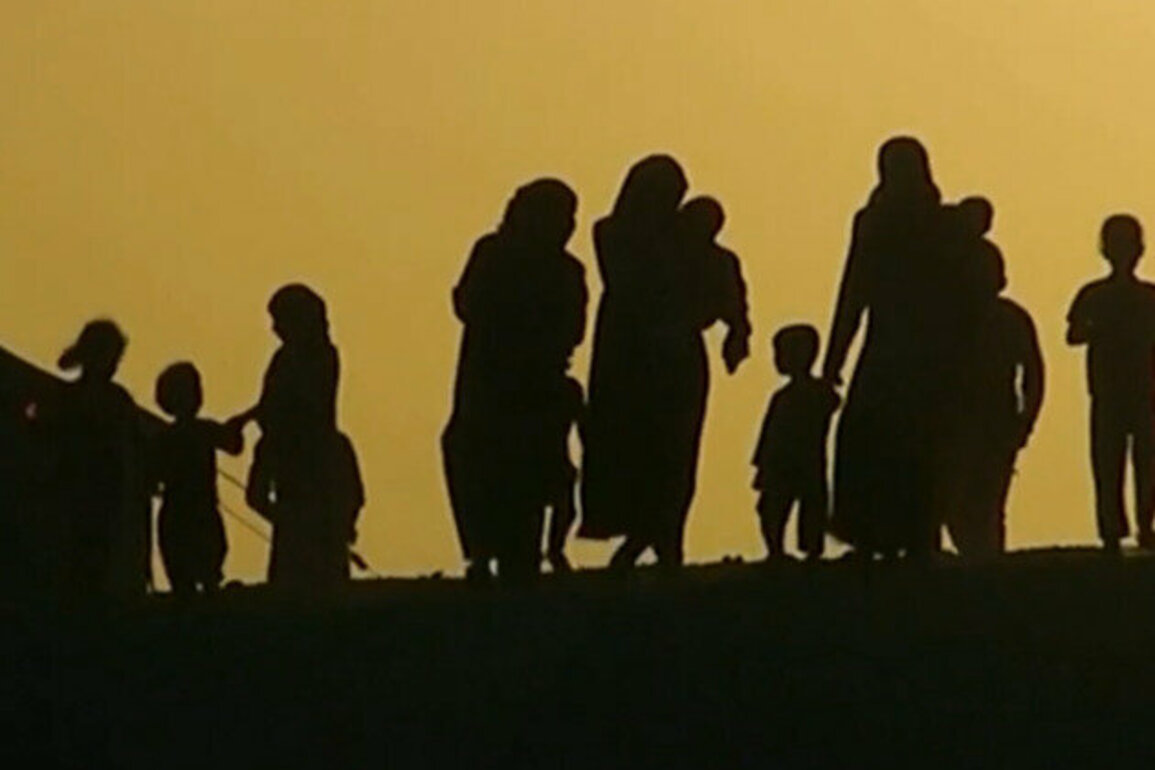
With the defeat of ISIS in 2019, some of the women who had left their country of citizenship to join it (also known as theISIS brides) were indefinitely detained in refugee/detention camps in Syria. These refugee/detention centres are supported by theGlobal Coalition Against ISIS, of which Australia is a member. The legal basis of the detention remains unclear until the individuals are charged and tried.
The international community has adopted essentially three different approaches to the question of repatriating its citizens who left to join ISIS.
Kazakhstan and Uzbekistan are two nations that have been relatively open to repatriation based on the notion that women are victims of ISIS who lacked agency in joining the organisation.
France, the UK, the USA and Australia have seen relatively few ISIS women repatriated. Women with alleged ISIS associations are viewed as a threat to national security.
Germany has repatriated women because they are mothers of young children and upon return to Germany, they are investigated and prosecuted according to their discernible role in the organisation.
In 2014, Section 119.2 of theCriminal Code Act 1995was enacted to make it an offence for an Australian person to enter or remain in ISIS territory. In 2020, the Australian Federal Police (AFP) issued arrest warrants for various women held in detainment camps in Syria, which will be served if the women return to Australia.
In addition, Australias response to citizens allegedly joining ISIS was to deprive the of of those who were dual nationals. Three Australian women had their citizenship revoked under s36B of theAustralian Citizenship Act. In 2022, the High Court held inAlexander v Minister for Home Affairsthat this deprivation of citizenship breached the separation of powers under Chapter III of theConstitution. The relevant provisions were found to be invalid.
In 2019, there were 66 Australian women and children in detention centres in Syria. In that year, and despite former Home Affairs MinisterPeter Duttons opposition to repatriation, the Australian Governmentrepatriateda group of children from these detention centres. In 2022, the new Labor Governmentrepatriateda further four women and 13 children.
Australian foreign policy and ISIS in the regionAustralian foreign policy should be just that, Australian not American, Chinese or European.
In 2024, one repatriated woman wassentencedunder Section 119.2 of the Criminal Code Act for entering or remaining in an area controlled by ISIS.
Save the Children Australia v Minister for Home Affairs (2023)and its subsequent appeal is the key case in Australia dealing with the issue of repatriating the Australian women and children held in Syrian camps.
This found in favour of the Government that:
Since then, no further reported attempts have been made by the Government to repatriate women and children in Syrian detention camps.
According to evidence at Senate Estimates this month, the Government became aware earlier this year of attempts by these women to return to Australia without Government assistance. This included applying for and securing citizenship by descent and Australian passports for the children.
To date, two women and four children have managed to escape the Syrian detention centre in which they were held and secure passage to Australia. It is possible that other Australian citizen women and children will seek to do the same.
Could return of ISIS women and children have been prevented?
Opposition LeaderSussan Leyhasarguedthe Government should have stopped these Australian citizen women and children from returning to Australia (even though they were doing so on their own steam). Without providing any details on how that could have legally been achieved, Ley has received support for this position from the usual sections of the media that shoot first and ask questions later.
Sky Newsreports:
But these media outlets fail to differentiate between a repatriation or evacuation organised and paid for by the Australian Government and law enforcement operations planning for how these women and children would be monitored, investigated and possibly charged if they return using their own arrangements.
Should the identity of terrorists be withheld?Juan Colequestions whether the decision of someFrench media outlets to withhold the names and images of known terrorists is a positive move.
The key question Ley and her media supporters fail to address is that the Australian Government cannot prevent an Australian citizen from returning to Australia unless that person has had their citizenship revoked.
After the High Court decisions in Alexander andBenbrika, Section 36D of the Citizenship Act allows the minister to apply to a court for an order to cease a persons Australian citizenship.
The Act (Section 36C) states that the court may make an order to cease a persons Australian citizenship if:
- the person is aged 14 years or over;
- the person is a dual national;
- the person has been convicted of one or more serious offences;
- the court has imposed a period or periods of imprisonment that total at least three years or more; and
- the conduct the offence relates to is so serious and significant that it demonstrates that the person has repudiated their allegiance to Australia.
Serious offences specified in the Act are provided under theCriminal Codeand include:
- certain terrorism offences including breaches of Extended Supervision Orders and Interim Supervision Orders;
- treason;
- espionage;
- foreign interference;
- advocating mutiny;
- foreign incursions and recruitment offences; and
- certain explosives and lethal devices offences.
In deciding whether a persons conduct is so serious and significant that it demonstrates they have repudiated their allegiance to Australia, the court must consider:
- whether the person has engaged in conduct that demonstrates a repudiation of the values, democratic beliefs, rights and liberties which underpin Australian society;
- the degree, duration or scale of the persons commitment to, or involvement in, the conduct constituting to which the offence relates;
- the intended scale of the conduct to which the conviction relates;
- the actual impact of the conduct to which the conviction relates; and
- whether the conduct caused, or was intended to cause, harm to human life or a loss of human life.
The first obstacle to cancelling the citizenship of these women would be to prove they are dual nationals. If they are not, cancellation becomes impossible. Has Ley and the relevant media asked whether these women are dual nationals? Some may have been born in Australia and never had any other citizenship.
Assuming some do have dual citizenship, to succeed with an application that satisfies a court on the above requirements would involve the gathering of extensive evidence on whether these women had been coerced into leaving Australia to join ISIS, what they did while they were overseas and the nature of any violent crimes they committed. That could not easily be done while the women were in Syria or even after they left Syria.
The gathering of this evidence will likely now be a focus of investigations by the AFP and others. While there may be a political advantage in Ley arguing that the Government should have stopped these women from returning to Australia, it does highlight either contempt for the law or an ignorance of it.
DrAbul Rizviisan Independent Australia columnistand a former Deputy Secretary of the Department of Immigration. You can follow Abul@RizviAbul.