

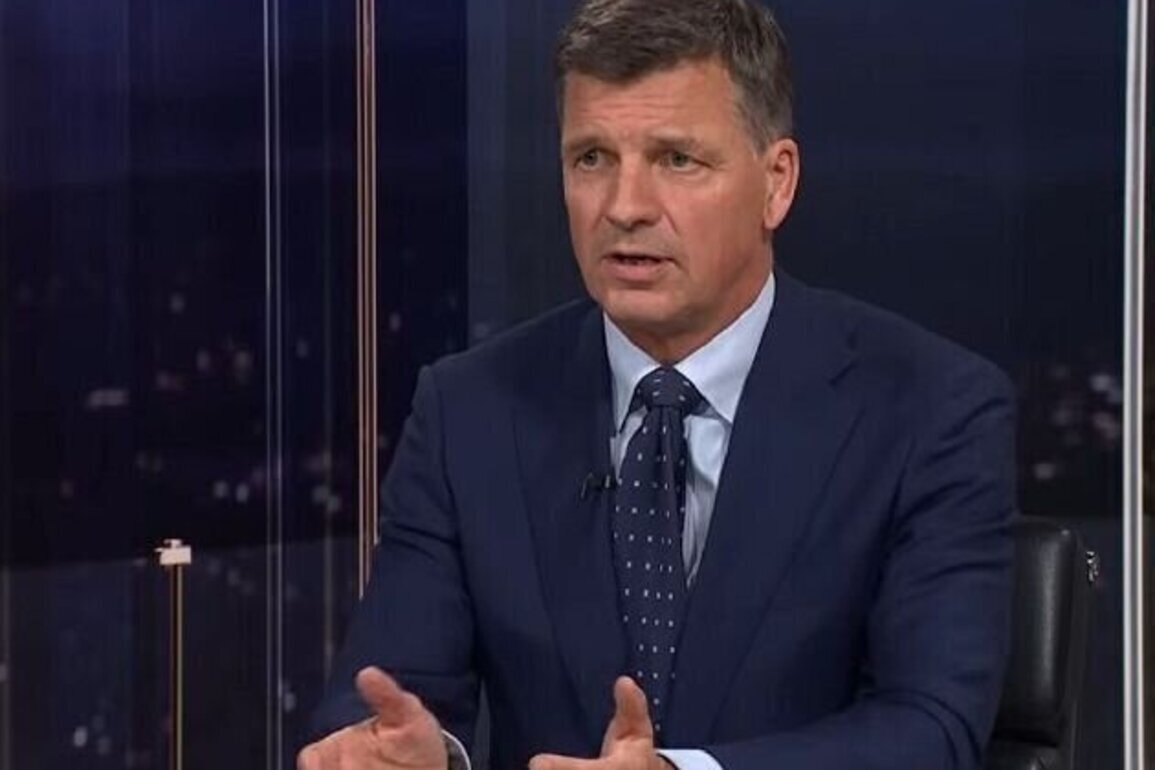
Opposition Leader Angus Taylor's immigration plan is aTrumplike trick that will narrowmarket freedom and entrench corporate power, argues ProfessorCarl Rhodes.
When Angus Taylor announced hisnew immigration planon 14 April, he received a torrent of backlash fromacross the political spectrum. The response was unsurprising given that, in the name of "Australian values", he directly attacked migrants, prompting accusations ranging fromun-Australiantoracist.
We have thrown open our borders to people whohave wanted to take from Australia and even change Australia to suit them, he declared in his address to theMenzies Research Centrebefore reverting to the familiar refrain of blaming Labor for having opened the migration floodgates.
It was a ham-fisted attempt at rabble-rousing populism, although the only person who appeared genuinely roused was One NationsPauline Hanson, who promptlyclaimed creditfor the policy. Unperturbed, Taylor doubled down in anop-edin the Australian Financial Review and onradio 2GB.
Taylors immigration policy was rightly condemned asTrumpian', marked not only by the stigmatisation of minorities and heavyhanded deportation plans, but by its reliance on moral panic, simplistic blame, and performative toughness over workable policy. Even Liberal Party MPs were dismayed,with one calling itrank populism and copying Trump.
Butwhat made the speech truly Trumplike was not immigration alone. It was the way border control was paired with an economic agenda that invokes "freedom" while shielding concentrated corporate power, with predictable consequences for inequality. It is this vision of business and markets that deserves closer scrutiny.
Hasties break with neoliberalism puts business on noticeWith Liberal leadership aspirant Andrew Hastie expressingopenly challenging "neoliberalism",which has anchored Coalition politics for decades, the political protection business once enjoyed can no longer be taken for granted, writes Professor Carl Rhodes.
A free market fantasy
Taylor was explicit that reducing immigration was only part of the solution. To restore Australians'standard of living and protect our way of life, he argued, Australia must shift away from Labors governmentdirected economy back to a freeenterprise economy.
In Taylors telling, the villains are as familiar as hisperformative toughness, he asserted, lest Australians be robbed of the "freedom" he claimed as being at the core of his political agenda:
This language is part of a wellworn populist script that frames economic problems as the product of elite interference rather than structural market failure and entrenched concentrations of economic power.
Taylor proposed three simple strategies to place Australians on the path to restored economic greatness, each expressed in a three-word slogan. They are removing crippling taxes, reducing choking regulation, and restoring cheaper power.
When it comes to business, his thinking is as doctrinaire and illconceived as his immigration policy. The problem is not that these measures would fail to help business; it is that they would do nothing to revitalise a genuinely free market economy.
What they would do is reduce business costs and increase profitability, especially at the big end of town. What they would not do is increase competition in an economy alreadydominated by highly concentrated industries.
This is where Taylors free market rhetoric becomes most unmistakably Trumpian. Like Trump, he equates "freedom"with the removal of constraints on capital, while remaining conspicuously silent on the question of market power. Competition, the very thing that makes markets work, drops out of the story while the structural conditions that entrench inequality are left untouched.
Angus Taylor pushes English requirement for permanent visa holdersAngus Taylors proposal to mandate English for permanent visa holders raises serious questions about fairness, practicality and its underlying political intent.
Markets rule where they should serve
Virtually allmajor industry sectorsin Australia are oligopolistic. There are four major banks, three dominant telecommunications firms, two supermarket chains controlling most grocery sales, just two major domestic airlines and mining is dominated by a handful of giants. Taylors plan would do nothing to alter this structural reality.
If Taylor were to implement his proposed economic agenda, the result would most likely be windfall corporate gains, rather than any meaningful renewal of market competition.
Lower taxes, weaker regulation, and cheaper energy may lift profits at the top end of town, but they do little to challenge entrenched market power or to improve outcomes for consumers and workers already struggling under an inflationdriven costofliving crisis.
Freeing up competition is a laudable goal. But it would require a far more ambitious agenda than Taylor is offering. Serious competition reform would mean robustly enforced competition law, the breakup of oligopolies, and the lowering of barriers to entry in concentrated industries. It would also mean confronting those who benefit most from the current market structure, rather than shielding them.
Encouraging real investment, intensifying competitive pressure, and supporting productivity growth would do far more to revitalise the economy and distribute its gains more broadly. What Taylor proposes instead is a program that stabilises and extends the power of the status quo, allowing markets to rule where they should serve.
Labors budget test will be to confront inequality or let populism growEconomic inequality is reshaping Australian politics. The May Budget will decide whether Labor tackles it or leaves the door open to populism.
Protecting the powerful
If free-market competition is truly the objective, then the power of dominant firms must be constrained, not bolstered. That would mean serious competition policy, effective antitrust enforcement, and a willingness to challenge incumbents. These requirements appear well beyond what Taylor and his policy advisers are prepared to contemplate, or even acknowledge.
The Trumplike trick is to sell this agenda as "freedom"while it protects the economically powerful. Free markets do not emerge by dismantling the state and stepping aside. They depend on rules that curb dominance, enable entry, and ensure that competitiveness determines success.
By cutting constraints while protecting incumbents, Taylors agenda does not revive market freedom. It narrows it. What is sold as economic freedomis, in reality, the quiet entrenchment of corporate power dressed up as reform.
Carl Rhodesis Professor of Business and Society at the University of Technology, Sydney. He has written severalbookson the relationship between liberal democracy and contemporary capitalism. You can follow him on X/Twitter@ProfCarlRhodes.
Related Articles
- Angus Taylor pushes English requirement for permanent visa holders
- Australian Valuescompliance for One Nation voters? Well done Angus!
- CARTOONS: Angus Taylor is seriously talking turkey
- Taylor and Hume's 'Tarzan and Jane' 1950s revival
- Angus Taylor disowns Coalition policies behind 202223 migration surge